













5 Unexpected Expenses of First-Time Renters

by

18 October 2019

Real Estate

First-Time Renters

Whether you’re leaving school or your parents’ home, moving into your first place can be exciting. But as first-time renters, you’ll also have to navigate the world of leases, landlords, and independent living expenses.

To help you prepare for your big move, let’s look at a handful of sometimes unexpected expenses new renters are faced with.

5 Unexpected Expenses of First-Time Renters:

1. Furniture:

Furniture

You might have a few pieces of furniture you can take to your new apartments, such as your old bed from your parents’ place or smaller items and décor you had in your dorm room. But your first apartment will likely be the biggest space you’ve had to furnish so far.

At a bare minimum, you’ll want to budget for a bed, a couch, and a simple dining set. But you also may need a TV stand, a dresser, a desk, and more seating if you plan to entertain frequently. And those are just the big items. Smaller tables, chairs, and decorative items would still have to be worked into your budget, though you don’t need them all upfront.

2. Pet Deposit or Fee:

If you plan to have a pet in your new rental, know that many landlords will charge you extra. That could mean a pet deposit, which can range from a small fee to a full month’s extra rent. They could charge you “pet rent”—a monthly add-on fee to your rent. Some landlords charge both. These fees cover potential damage from pets, like odor or scratched floors, when you move out. They vary widely though, so be sure to compare your options before getting your heart set on a place.

3. Security Deposits:
Security Deposits

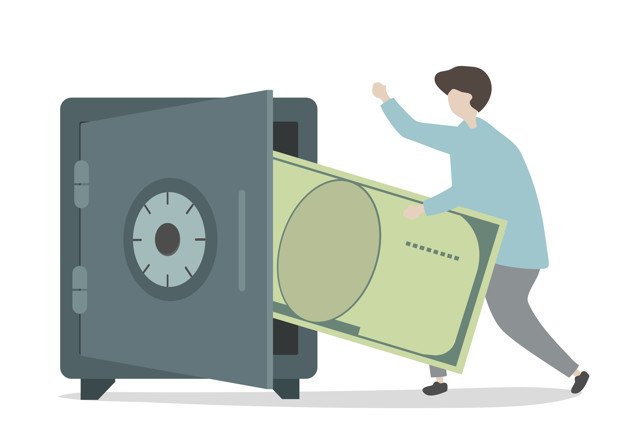
When you move into a new apartment, you don’t simply start paying the regular rent. You’ll almost always be required to pay a security deposit before you can move in. The amount can vary from one landlord to the next, but you can generally expect to pay at least a month’s rent as your security deposit.

4. Renter’s Insurance:

Renter’s Insurance

If you move into a new apartment and disaster strikes—like a fire that causes you to lose most of your possessions—you might assume your landlord’s insurance will cover what you lost. But that isn’t the case. Your landlord’s insurance will cover the structure itself, but you’re responsible for insuring your belongings. That means taking on another expense you might not have considered: renter’s insurance.

6. Utilities:

If you’re used to living under someone else’s roof or at college, you might not be used to paying for all your own utilities. These expenses can also come as a surprise. Of course, there’s the usual electric bill, internet, and cell phone service. But you’ll also need to cover cable (or a streaming service like PlayStation Vue or Philo for cord-cutters) and possibly water, sewage, and trash collection fees as well.

Knowing your future costs upfront can help you better prepare when searching for your first apartment. Keep these expenses in mind when setting your budget, both monthly as well as for the move itself.

Read Also:

Content Rally wrapped around an online publication where you can publish your own intellectuals. It is a publishing platform designed to make great stories by content creators. This is your era, your place to be online. So come forward share your views, thoughts and ideas via Content Rally.

View all posts

Leave a Reply

Your email address will not be published. Required fields are marked *

Related

Rigging Equipment

Lifting and Rigging Equipment—Your Hardware Guide

Though some individuals think they can do anything, construction workers are not strong enough to lift and monitor heavy loads. That’s where lifting and rigging equipment comes in. Building construction and transportation of cargo wouldn’t be possible without the correct equipment. Most of the equipment used to load trucks and harness heavy building components are designed to get the job done fast. These heavy machinery components are also there for safety. So what kind of rigging and lifting equipment can you get & how versatile are they? Go through the following types of rigging and lifting equipment to find out. Types of Equipment for the Job Load Measuring Most of the time when there’s an exceptionally heavy load that needs to be lifted workers will use load monitoring equipment. The monitoring device is used to weigh loads under heavy stress. They are needed with lifts where the friction of the load could result in more strain on the tackle or hoist. The monitoring device can also be used when loads that need to be lifted are more than 90% of capacity the equipment can handle. Measuring devices are also used to give the exact weight of a load. Shackle Equipment Shackles are manufactured with anchor and chain formations to be used for rigging projects. Typically shackles come with safety bolts, screw pins, and round pins. An anchor shackle has a rounded eye which makes it suitable for attaching multiple slings and hooks. A Chain Shackle features a straight eye and they’re designed to connect to a single lifting device. Eyebolts There are two types of eyebolts; the shouldered or unshouldered eyebolt. Shouldered eyebolts: Used for angular and vertical lifts. When used for angular lifts the shouldered eyebolt should only be used for lifting angles of less than 45°. Unshouldered eyebolts: These components can only be used for vertical lifts as angular lifts will bend the threaded shaft. The eyebolt is used to firmly attach a securing eye to a structure. They feature self-locking nuts for safety and security. Usually, the minimum thread connection between an eyebolt and tapped hold is 1.5 times the diameter of the thread engagement. Minimum thread engagement must be maintained for safety purposes. Hooking Equipment A hook is typically attached to a hoist and it’s used to lift heavy loads off the ground. Hooks are known to be the weakest component to lifting equipment. They tend to bend if there’s an overload of material being hoisted. To avoid bending, always use a safe working load. Loads are centralized with full capacity when combining shackles with multiple sling eyes and integrating them onto a hook. Hooks should also feature a safety latch to bridge the throat opening which prevents the release of load lines. Wire Load Clips Wire load clips are used to make an eye on a wire rope. You get three different types of load clips: U-bolt Fist grip Collet connection clip Load clips are never used more than once for an application. They may not have the same torque if they’re used for the second time. Ring Components Forged steel rings are not made by welding the rings together. They’re solid rings that are standard in lifting operations. Rings should not be welded closed as they’re susceptible to snapping. Rings should always be inspected for openings, cracks or twists before they’re used for lifting heavy loads. Turnbuckles A turnbuckle is used to adjust the tension and length of ropes, tie rods & cables. Typically turnbuckles consist of two threaded eye bolts. For durability and safety turnbuckles should always be forged using alloy steel. Turnbuckles are rarely used in rigging systems but when they are they should be secured to a frame with lock pins or wires to prevent them from loosening. Hoists A hoist is a mechanical lifting device that moves heavy objects vertically and they support hanging loads. You’re able to evenly distribute weight by using pulley systems or gears. Hoists can be a fixed or they can be mobile. They’re designed for: Construction work To lift engines out of heavy trucks or buses Logging Mining Automotive removal Hooks are incorporated onto a fixed end. The rope or cable is connected to a crane and the hook is used to engage the load. Manual Hoist Manual hoists are operated without electricity. A manual hoist uses two different chains called the hand chain and the load chain. The hand chain is used to control the lifting and the lowering of materials. The load chain is used to support the materials being lifted. Powered Hoists You get three different types of powered hoists: Electrical Air/Pneumatic Hydraulic The lifting speed of a powered hoist is a lot faster. Usually, scales can be integrated into powered hoists to measure the weight of a load. What is Lifting and Rigging Equipment Used For? If you’re not sure if this article is for you, what we’ve discussed can be used to lift and maneuver heavy objects safely, such as: Hoisting heavy pillars Loading cargo onto trucks Lifting heavy machinery Securing components to a machine Securing cargo Monitoring the weight of heavy loads Final Thoughts There are many safety measures construction workers have to adhere to when working with heavy machinery. Always check your construction equipment for any cracks, dents or weak points before working on a site. When buying equipment always exam hoists, hooks and any connection links to make sure they’ resecure & sturdy. Someone’s life could depend on it. Read Also: The Rapid Growth In The Global Industrial Automation Market And Its Career Opportunities

READ MOREDetails
Commercial Construction After COVID-19

Commercial Construction After COVID-19: How Developers Can Adapt

The COVID-19 pandemic has disrupted the construction industry heavily. With people focusing on social distancing measures and businesses going online to cater to their customers, the commercial sector took a hit. The pandemic fuelled a boom in e-commerce has increased the demand for retail spaces, while many office spaces were left vacant. Fortunately, some companies have been taking up strategies that can benefit the commercial construction sector greatly. Speaking of adapting, the commercial real estate sector can focus on strategies like adaptive reuse. Apart from this, developers can also focus on creating spaces that are safe from COVID-19. When both these strategies are combined, the developers can repurpose vacant spaces into structures that are higher in demand and also ensure the indoor spaces are safe from the novel virus. Over the last few months, plenty of safety measures and precautions have been provided by organizations like ASHRAE and the CDC. The IWBI created the WELL Health Safety standard by providing scientifically proven measures for fighting against infectious diseases including COVID-19. Creating Safer Indoor Spaces: After a lot of research on the transmission of the coronavirus, extremely important evidence came into the picture that COVID-19 transmission can be airborne, especially in poorly ventilated indoor spaces. Therefore, creating safer than ever indoor spaces should be a top priority for developers. ASHRAE released a detailed guide for building owners on measures for promoting a safe indoor environment. The recommendations can be summarized in 3 main areas: Increasing outdoor air ventilation as much as possible, while minimizing indoor air recirculation. Upgrading the air filters to MERV rating 13 or higher. Installing Ultraviolet Germicidal Irradiation (UVGI) system for killing harmful airborne viruses and bacteria. Depending on the building conditions, the applications of the above-mentioned measures may vary but the main principle of ventilation, filtering, and purification still holds. Apart from new construction, they can also be implemented for existing buildings and in renovation projects as well for improving the indoor air quality. It is highly recommended to consult professionals that can identify the optimal measures for all building types. The IWBI came up with a list of 22 effective measures against COVID-19, and building owners can obtain the WELL Health Safety Seal by implementing at least 15 measures that are subject to verification. Mixed-Use Projects: A Viable Option While many companies are struggling with low occupancy in commercial buildings, the demand for housing is on the rise. A mixed-use project can not only provide housing spaces but also offer spaces for commercial use as well at the same time. Some of the interesting benefits observe are that in a mixed-use building, the occupied residential spaces will require services that can be easily accessible and provided from the commercial spaces in the same building. Also, business owners are drawn to such buildings as their potential customers are already there. Professionals working from home are also attracted to mixed-use developments as it offers various services within walking distance. Apart from this, mixed-use projects are highly beneficial for entrepreneurs planning to open a franchise, since they can have immediate access to a large number of potential customers. Repurposing Vacant Buildings with Adaptive Reuse: As mentioned earlier, some types of commercial buildings, like warehouses, are rising in demand, while some are seeing high vacancies. Adaptive reuse can be an excellent strategy for such building owners as the vacant buildings can be repurposed into structures like apartments, which are always in high demand. Work from home, implemented as a social distancing measure to fight against the spread of COVID-19 transmission, is now becoming a permanent solution for many companies. This led to less use of office space, which resulted in vacant office spaces and buildings. Repurposing such buildings is a viable strategy for office building owners. Conclusion: The commercial real estate sector was highly disrupted in the pandemic as the demand for some buildings increased greatly, while the others are now facing imminent vacancy. For staying competitive, developers implement the strategies mentioned above. Read Also: Commercial and Residential Construction: Key Differences Lifting and Rigging Equipment—Your Hardware Guide 3 New Age Engineering & Construction Technology All You Must Know About Construction Business Management Software

READ MOREDetails
Transform Homes

How External Cladding Can Transform Homes?

The facade of a home creates the first impression for a visitor. And for most homeowners, there really is quite no place like home. The comfort and privacy of the home is something that can never be replicated elsewhere. This is precisely why it is necessary to ensure that creature comforts and the luxury aspects of your home are not compromised in any way. Vinyl cladding and recladding is an effective way to give your home an absolutely stunning makeover. Here is what you need to know about transforming your homes in a cost-effective manner. Choose An Experienced Service Provider : It is absolutely necessary to choose the services of experienced cladding installers Melbourne. Pick an agency that is reputed, with extensive experience in cladding across all surfaces, including - fibro, weatherboards, corrugated iron, concrete, brick, and artificial brick. The experience of a service provider will reflect in the quality of the finish and time taken to complete the task. It is necessary to choose a service provider who has successfully completed projects, where homes were of different sizes and designs. By choosing a service provider with limited exposure, you run the risk of an improper finish and it is also possible that the outcome would be a lot different from your expectations. Insulation Effects : When you opt for vinyl cladding, you get the added benefit of insulation which offers great thermal effects. The option of choosing the extent of insulation rests with you as the boards typically come with a foam of either 20 mm or 30 mm thickness. This will also help to fight noise pollution in addition to thermal protection. Ensure that the design of the structure is taken into consideration when you choose the thickness of the insulation boards. Additionally, it is also possible for you to consider foil for improving the quality of insulation. Functional And Esthetic Benefits : Vinyl cladding comes with dual benefits. The first is the functional protection it affords to the home through superior thermal protection and reduction in noise levels. In other words, it means that the homes will be warm when it is cold outside and cooler when it is hot outside. This will help to keep the electricity bills low, while at the same time offering greater comfort naturally. In addition to the functional aspect, the boards improve the esthetics considerably. The right choice of color and finish can greatly transform a home, with a large number of homeowners choosing the boards for renovating old homes. When you choose a service provider, ensure that you pick one who has all the necessary equipment and resources to handle the installation of the boards. The quality of the boards needs to be your primary consideration. This will ensure that the boards retain the look for long, and are cost-effective. A distinct advantage of the boards is the fact that specific boards can be replaced if damaged. This is a great advantage that will prevent the need for pulling down an entire section of the wall to replace a damaged portion. Read Also : How Do Law Firms Help Companies With Their Real Estate Issues? How Real Estate Factors Into Business Decisions Top Tips For Flipping Homes

READ MOREDetails