












Senior-Friendly Exercise Routines: Enhancing Quality Of Life Guide

Published on: 01 December 2023 Last Updated on: 11 September 2024
Senior Friendly Exercise Routines

Aging is a natural part of life, and staying active is essential for seniors to maintain a high quality of life. Many older adults face challenges when it comes to exercising, from chronic health conditions to a lack of knowledge on where to start. We understand the unique needs, focusing on exercises that improve balance while minimizing the risk of injury. Whether you’re a senior looking to stay fit or a caregiver seeking valuable insights, this comprehensive guide is for you.

This comprehensive guide explores the many benefits of exercise. It also offers guidance on safe and effective workout plans to individuals. This provides tips for making physical activity an enjoyable and sustainable part of your life.

Why Exercise Is Essential For Seniors?

Regular exercise provides a multitude of physical and mental benefits that enable seniors to stay active and engaged. According to the Centers for Disease Control and Prevention (CDC), it can help reduce the risk of chronic diseases, manage symptoms, and improve quality of life. For example:

Improves heart health: The American Heart Association states that staying active can lower blood pressure and cholesterol. This reduces seniors’ risk of heart disease by up to 35%.

Builds muscle and bone strength: Weight training and resistance exercises build muscle mass, which can prevent injury and reduce age-related muscle loss by up to 3% per year.
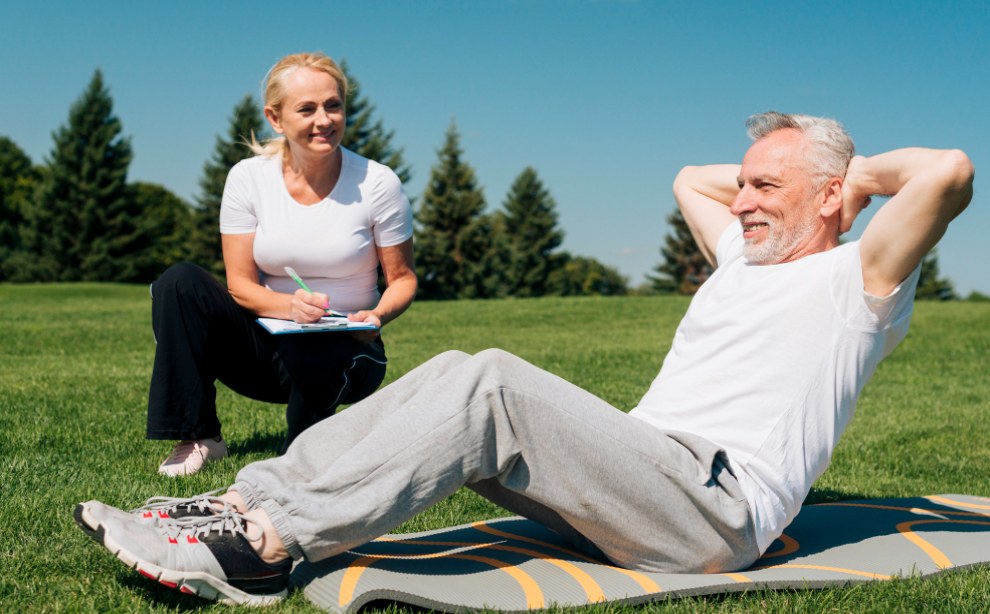
Boosts mood and cognitive function: Exercising stimulates chemicals in the brain that enhance mood, sleep, and memory, reducing the risk of depression and dementia.

Prevents loss of mobility: Strength, balance, and flexibility exercises keep joints supple and reduce seniors’ risk of falls and disability by 28%, per JAMA Internal Medicine.

Physical activity provides tangible benefits for both physical and mental well-being in aging individuals but also highlights the significance of consulting healthcare professionals, especially those specializing in adult primary care. Yet, to unlock these benefits, seniors must choose activities suited to their needs and abilities.

Tailoring Exercise to Senior Abilities 

When designing exercise plans for seniors, several important factors are to consider:

Health Conditions: Seniors often have chronic conditions like arthritis, osteoporosis, and heart disease. Consult a doctor about safe activities and modifications.

Physical Capabilities: Assess factors like bone/joint health, balance, mobility, strength, and endurance. Choose exercises that target any limitations.

Interests And Goals: Focus on exercises the senior enjoys. This helps them set realistic health goals like building strength or improving balance.

Accessibility: Impact on exercise includes location, financial constraints, and transportation. Find low-cost and convenient options like at-home routines.

Getting input from healthcare providers, trainers, and the seniors themselves ensures regimens are safe, effective, and sustainable. Exercise programs, such as the ems suits, should evolve over time to match seniors’ changing capabilities and fitness levels.

Best Exercises For Seniors

Any physical activity has its benefits. Certain types of exercise lend themselves particularly well to seniors’ abilities. Incorporating a mix provides whole-body health improvements.

Aerobic Exercise 

Engaging in low-impact aerobic activities can help improve cardiovascular health. Options include:

  • Walking: A simple, accessible exercise that improves endurance.
  • Swimming: Helps build strength and cardiovascular fitness without stress on joints.
  • Chair Aerobics: Seated, low-impact movement to upbeat music.
  • Tai Chi: Lowers blood pressure while working with balance and flexibility. 

Aim to achieve at least 150 minutes of moderate-intensity aerobic activity per week, such as brisk walking.

Strength Training  

Working major muscle groups combats age-related loss of muscle mass. Try:

  • Body weight exercises: Squats, planks, and lunges use one’s weight as resistance.
  • Resistance bands/tubing: Provides flexible resistance strength training.
  • Weight machines: Begin with low weight and high repetition.
  • Functional fitness: Use daily activities like standing from a chair, and carrying groceries.

Aim to have 8-12 strength sessions spread over 2 or more days per week.

Flexibility Exercises 

Stretching, yoga, and Pilates keep muscles and joints limber. Benefits include:

  • Improved range of motion and posture
  • Reduced risk of injury 
  • Increased balance and stability

Aim to stretch major muscle groups 2-3 days per week.

Balance Exercises

Balance tends to decline with age, leading to falls. Specific activities to improve balance include:

  • Tai Chi
  • Standing heel/toe raises
  • Walking heel-to-toe in a straight line
  • Standing on one foot

To improve balance, perform balance exercises at least 3 days per week, with each session lasting at least 15 minutes.

Creating an Effective Senior Exercise Routine

When designing a holistic fitness regimen, keep the FITT principle in mind:

  • Frequency: Aim for at least 150 minutes per week of moderate exercise. Include at least 2 days of strength training.
  • Intensity: Moderate intensity is the safest and most effective for seniors. Use the “talk test” to avoid overexertion. 
  • Time: Start with 5-10 minute sessions and work up to 30 minute workouts.
  • Type: Combine aerobic, strength, balance, and flexibility training for fitness. 

Other tips for creating an effective senior exercise routine:

  • Get guidance from a physical therapist or certified trainer.
  • Focus on proper form and technique over speed.
  • Warm up and cool down before and after exercising.
  • Include rest days for recovery and to prevent overtraining.
  • Track progress through activity journals or fitness trackers.
  • Stay hydrated and listen to your body’s limits.

Tailor exercise routines to individual fitness levels, goals, and medical needs. The key is starting slow and building up over time. Patience and consistency are vital.

Exercise Safety Tips for Seniors 

While physical activity is beneficial for older adults, follow these precautions to prevent risk:

  • Consult your doctor, especially if you have chronic health conditions.
  • Warm up with 5-10 minutes of light activity to prepare muscles and joints.
  • Use proper form to avoid straining muscles or joints. Start to work with a trainer.
  • Increase intensity over weeks and months to avoid overexertion.
  • Listen to warning signs like chest pain, dizziness, or shortness of breath and stop activity if they occur.
  • Wear supportive footwear with good traction to prevent falls.
  • Stay hydrated and avoid exercise during extreme heat.
  • Cool down with gentler activity after workouts to ease muscles.

Seniors should seek immediate medical attention if they experience symptoms like chest tightness or severe pain during or after exercising. Starting slow and maintaining safe habits are key.

Making Exercise a Lifelong Habit

To sustain motivation and make working out a regular lifelong habit, seniors can:

  • Join community fitness classes designed for older adults to meet peers and enjoy group energy.
  • Find an exercise buddy for mutual support and accountability.
  • Incorporate activity into daily routines like housework or gardening.
  • Track progress with a journal, app, or wearable device to stay motivated.
  • Focus on enjoyment first by choosing activities you find fun and energizing.
  • Listen to your body and be flexible about modifying plans when needed.
  • Reward small wins and don’t dwell on temporary setbacks. Progress takes patience.

Staying active provides lifelong benefits for seniors’ health, independence, and enjoyment of life. Following the guidance in this ultimate guide can help older adults start and sustain customized exercise routines tailored to their unique needs and abilities. The key is taking the first step!

FAQs:-

1. How can seniors exercise if they have chronic pain or mobility issues?

Ans: Consult a physical therapist to design a program suited to your health conditions. Low-impact activities like water aerobics, chair yoga, walking, or Tai Chi. This can help improve strength and mobility without aggravating pain.

2. What home exercises should seniors do if they can’t get to a gym? 

Ans: Simple strength exercises like squats or planks using your body weight are very effective. For staying active, consider chair aerobics, stretching routines, jogging in place, or engaging in activities like gardening and household chores. These can be effective ways to incorporate movement into your routine.

3. How long does it take to see the benefits of a senior exercise routine?

Ans: While some benefits, like better sleep or mood, can occur immediately. Research shows it takes about 6-8 weeks to begin noticing significant improvements in strength, balance, and cardiovascular health. Stick with the regimen to unlock the full benefits.

Conclusion:

And there you have it – a comprehensive guide to senior-friendly exercise routines, your ultimate key to unlocking a healthier and more vibrant life.

Staying active isn’t just a phase – it’s a lifelong habit. Join community classes, find an exercise buddy, and make it a part of your daily routine. Listen to your body, enjoy the journey, and celebrate small victories.

Remember, this guide is your companion on the path to a healthier and more vibrant you.

Take that first step, stay consistent, and relish the lifelong benefits that exercise brings. Here’s to a future filled with strength, balance, and joy!

Additional Reading:

Content Rally wrapped around an online publication where you can publish your own intellectuals. It is a publishing platform designed to make great stories by content creators. This is your era, your place to be online. So come forward share your views, thoughts and ideas via Content Rally.

View all posts

Leave a Reply

Your email address will not be published. Required fields are marked *

Related

Caregivers

How To Care For The Elderly: Tips For The Caregivers

Ultimately, caring for the elderly can be very challenging. It can even be emotionally and physically exhausting. After all, the responsibilities of taking good care of a senior citizen may include help for anything like eating, dressing, and reminding them to take their medicine. With all these tasks, everything boils down to one thing – patience, patience, patience. If you’re new in caregiving and you’re planning to work in San Antonio nursing home, here are a few tips to consider when caring for the elderly. Bathing and Personal Hygiene: A large part of caregiving for the elderly usually includes assistance with daily activities such as bathing and getting dressed properly. With that said, you should be prepared to how much helping someone can be incredibly daunting. Below are some ways to help the elderly with grooming and dressing: Set a bathing schedule that suits their needs. While people would like to have a daily shower, a senior citizen may only need a daily sponge bath or even a full bath twice to thrice a week. Make sure you create a peaceful environment for bathing. You can use the music to keep them calm. Waterfalls sounds, birds, or classical music may help to soothe them. Be sure you prepare their bathwater before you bring them into the bathroom. This will help minimize the agitation of the senior citizen. Remove their clothes right away to prevent toileting accidents from happening. Be ready with the towel and clothing when they come out of the shower or tub. After the bath, put on the towel immediately to keep them warm and protect their modesty. Use assistive devices to make bathing and grooming safer. Look for shower chair or hair washing tray to help you carry out your caregiving tasks. Ensure there are no safety issues in the bathroom. Keep the throw rugs away so they’ll not create a risk of falling. Also, check the water temperature before the elderly gets into the tub and make sure the grab bars are installed properly. Prepare clothes in order and so dressing will no longer be difficult. If possible, try to encourage the elderly you’re caring to dress themselves If you think brushing their teeth is quite tricky, use mouthwash as an excellent oral alternative. Safety Hazards: Safety is one of the primary concerns when caring for the elderly. For instance, falls are the most dangerous accidents that may happen. Keep these things in mind to ensure the safety of older adults: Check whether the room has adequate lighting. Installing some nightlights can be a perfect idea. Be mindful of the clutter that surrounds the area. Make sure you don’t let clutter pile up on the floor and in other familiar places. Check all the electrical cords. Be sure they’re tacked to the baseboards and out of the elderly’s way. Reduce the number of furniture that may interfere with the smooth movements of the elderly. Remove extra pieces if possible to protect them from accidents. Be sure you have properly installed handrails and grab bars along the stairways and in the bathroom. Physical Health: Doing physical activities and exercise can be useful for an elderly individual. Thus, find ways to help them stay active as long as their condition permits them. However, be sure to ask the doctor first before doing any activity. Here’s how you can encourage an older adult to have an active lifestyle: As a caregiver, you can take a walk together on a daily basis. If walking is almost impossible, you can take them on a stationary bike or shop airline approved mobility scooters. If their condition allows them to do so, let the elderly do some stuff like sweeping, gardening, and dusting. Communication: Being a caregiver means you have to communicate with an elderly individual from time to time. Moreover, when talking to them, make sure you do it directly, simply, and positively. Below are some communication tips that you may think about when dealing with older people: Use eye contact and mention their name when you’re trying to speak to them. Use simple questions when asking. Questions like, “Are you hungry?” or “Are you tired?” If you want to make a conversation, don’t hesitate to hold their hand. The Bottom Line: Taking care of the elderly is no easy task and without patience, time, and little hard work, you may find caregiving a completely daunting process. Hopefully, you see this article helpful as you take on this caregiving role. Read Also: How To Protect Your Finances While In A Nursing Home How Martial Art Can Help You Stay Fit And Healthy

READ MOREDetails
fitness

Why is Fitness Important for Weight Loss?

Being fit is an incredibly important part of weight loss. Yes, nutrition and eating right is an integral part of the process, however, your fitness regime is an equally vital part of the process. Here’s why. Fitness classes help to burn calories: If you want to lose weight, you ultimately need to burn calories. Ideally, you need to burn more than you take in so that you can get rid of the excess weight that you want to. Cardiovascular exercise is the best way to do this because you’re expending a lot of energy while performing these activities. Here a few cardiovascular exercises as well as the number of calories that you can burn during these activities: A person, weighing in at 155 pounds, who runs at 7.5 miles per hour has the potential to burn 465 calories in 30 minutes. A person of the same weight will burn372 calories swimming breaststroke. Swimming butterfly for 30 minutes will burn 409 calories. Jogging burns 372 calories in 30 minutes if the 155-pound person jogs at a steady pace of 6 miles per hour. So, as you can see, cardiovascular exercise is a great calorie-buster for losing weight! Being fit promotes the creation of lean muscle mass: Strength and resistance training helps to create lean muscle mass. The way that it does this is by creating thicker muscle fibers. This is important in weight loss as the more lean muscle mass you have the more calories you will be burning at rest. Experts say that one pound of muscle burns 6.5 calories. Women often fear that weight training will make them bulky. This couldn’t be farther from the truth because a woman’s body is not designed to do this. However, what weight training does do is stimulate the creation of lean muscle mass. So, as part of your fitness regime, we encourage you to start lifting weights! Foods to eat to help create lean muscle mass: When you exercise, your muscles are microscopically torn. Thus, they need to build themselves up. In order to build them up to be stronger, they need protein to accomplish this. (Protein is an integral part of building muscle.) Know More About weight loss as the more lean muscle mass against. So after a workout, make sure that you take a protein shake (which is available from most health shops or pharmacies) or otherwise, eat a meal that is rich in protein. Foods that are recommended for your post-workout meals include: Eggs, Salmon, Lean chicken breasts, Soybeans, Lean beef, and Edamame beans. If you do decide to go for a protein shake, make sure that you choose one that is right for you. For example, if you are lactose intolerant rather choose a whey protein isolate powder. Fitness helps you feel good about yourself: Following a fitness plan, working out and eating properly helps you to feel good about yourself. Exercising stimulates the production of endorphins. These feel-good chemicals in your body stimulate feelings of happiness. When you feel happy when you’re exercising, you’re more likely to keep doing it because you like the way you feel afterward. And because you’re keeping on with a consistent exercise routine you’re more likely to lose weight because you’re burning more calories! Breathing is a very important part of the exercise and learning to harness this can help you to push harder as well as center yourself, reduce stress and increase your sense of general well-being. Exercise modalities such as Yoga and Pilates teach practitioners about how to use their breath during the class in conjunction with the movements. If you’re feeling stressed and/or anxious why not pop into one of these classes so that you can experience the feel-good properties of these disciplines. As you can see, fitness is an integral part of weight loss because being active is an integral part of losing weight. To achieve an optimal programme, combining cardiovascular activity with strength and resistance training so that you can reap the benefits that having a good amount of lean muscle mass has for your body. Read Also: Mistakes To Avoid When Trying To Lose Belly Fat Eating Good Quality Foods For Diet Crucial Tips To Getting A Flat Stomach Easy Diet Tips To Summer Six Pack Abs

READ MOREDetails
importance of family health insurance

Health Insurance Policy For Family – Here’s A List Of 5 Plans You Can Consider

In our current time which is characterised by dynamic lifestyles and unforeseen health challenges, the significance of family health insurance plans cannot be overstated. These comprehensive policies not only provide financial security but also grant families access to high-quality healthcare, ensuring the well-being of their loved ones. In this article, we will explore the profound importance of family health insurance plans and delve into the five best family health insurance plans, empowering you to make informed decisions that safeguard the health and happiness of your family. The Power Of Comprehensive Protection Family health insurance plans hold immense significance as they serve as a robust shield of protection against the uncertainties of health-related challenges that can affect any member of your family. These plans offer comprehensive coverage that extends beyond mere financial security, encapsulating the emotional well-being and health of your loved ones. By pooling the collective health needs of your family under a single policy, family health insurance plans grant you the peace of mind that comes from knowing your family members are safeguarded against unexpected medical expenses. The significance of family health insurance plans lies in their ability to provide access to high-quality healthcare services. These plans often come with extensive networks of healthcare providers, ensuring that your family members can receive timely and appropriate medical attention. In a world where medical advancements are rapid and treatments are varied, these plans open doors to specialists, hospitals and clinics that offer specialised care, accurate diagnoses and effective treatments. Moreover, family health insurance plans underscore the importance of preventive care and early intervention. By covering a spectrum of preventive services, such as vaccinations, screenings and annual health check-ups, these plans promote a proactive approach to health management. This focus on prevention is not just a cost-saving measure but also a commitment to ensuring your family members' overall well-being by detecting potential health issues before they become major concerns. Access To Quality Healthcare One of the foremost advantages of family health insurance plans is the access they provide to high-quality healthcare services. These plans encompass a broad network of healthcare providers, including doctors, specialists, hospitals and clinics. This extensive network ensures that family members can receive timely medical attention from qualified professionals, which is essential for accurate diagnoses, effective treatments and proactive preventive care. Preventive Care And Early Intervention Family health insurance plans often emphasise the importance of preventive care and early intervention. Many policies cover a range of preventive services, such as diagnosis of diseases, routine check-ups, screenings and wellness programs. These services play a pivotal role in identifying potential health issues before they escalate into more severe conditions. By focusing on prevention, these plans not only promote better health outcomes but also contribute to reducing healthcare costs by addressing problems in their early stages, when they are more manageable and less expensive to treat. Financial Peace Of Mind The emotional well-being of your family members is intrinsically linked to their physical health. Family health insurance plans provide invaluable peace of mind, knowing that your loved ones are covered in times of medical emergencies or unexpected health concerns. This sense of security allows families to concentrate on the moments that matter most – fostering relationships, pursuing aspirations and embracing daily life – without the constant worry of potential financial strains due to unexpected healthcare costs. What Are The Crucial Needs Of A Family That Needs To Be Covered By Family Health Insurance? These plans are designed to offer a wide range of benefits, ensuring that your family's health and well-being are safeguarded against unexpected medical expenses. The benefits of this plan are as follows: Comprehensive Coverage One of the primary reasons these family health insurance plans are considered some of the best is the comprehensive coverage they offer. The plans cover a wide range of medical expenses, including hospitalisation, surgeries, doctor consultations, diagnostic tests and treatments. They also extend coverage to pre-hospitalisation and post-hospitalisation expenses, ensuring that your family is protected against various health-related contingencies. Family Floater Basis The plans operate on a family floater basis, allowing you to cover your entire family under a single roof. This feature is especially advantageous for families with multiple members, as the sum insured can be utilised by any family member as per their individual medical needs. This not only simplifies the management of insurance but also ensures that every family member has access to necessary medical care. Restoration Benefits Many of the family health insurance plans offer a unique restoration benefit, setting it apart from other insurance plans. If the sum insured is exhausted during the policy year due to claims, the plans automatically restore the entire sum insured amount for future hospitalisations. This invaluable feature ensures that your family's health coverage remains intact even in the face of successive medical events. Delivery And Maternity Expenses The policies provide coverage for maternity-related expenses, making them an excellent choice for families planning to expand. They cover pre-natal and post-natal expenses, childbirth-related expenses and medical care for the newborn. This feature addresses the significant medical costs associated with pregnancy and childbirth. Annual Health Check-ups Recognizing the importance of preventive care, the family health insurance plans offer annual health check-up benefits for family members covered under the policy. This encourages regular health screenings, early detection of potential health issues and proactive health management. No Claim Bonus For each claim-free year, many family health insurance policies offer a No-Claim Bonus (NCB) that increases the sum insured by a certain percentage, up to a specified limit. This rewards your family for maintaining good health prioritizing preventive care and not making any claim during a policy year. Day Care Procedures A good family health insurance policy is one that provides a sense of flexibility in its coverage. In addition to hospitalisations, many family health insurance plans cover daycare procedures as well, allowing your family members to receive necessary medical treatments without requiring extended hospitalisation. This feature ensures that your family has access to swift and effective treatments for various medical conditions. Emergency Ambulance Cover In case of medical emergencies, the family health insurance policies provide coverage for emergency ambulance services. This ensures timely transportation to the hospital when needed, eliminating any concerns about transportation costs during emergencies. Five Family Health Insurance Plans You Can Consider Based on the aforementioned benefits, to simplify your quest in picking the best family health insurance plan to safeguard your family, the following is the list of five plans offered by Star Health Insurance that you can consider: 1. Family Health Optima Insurance Plan The Family Health Optima Insurance Plan offered by Star Health Insurance is a comprehensive health insurance solution designed to secure the well-being of your entire family. This plan operates on a family floater basis, covering all family members under a single policy. It provides extensive coverage for hospitalisation, surgeries, doctor consultations and treatments. 2. Star Comprehensive Insurance Policy The Star Comprehensive Insurance Policy from Star Health Insurance is a robust health coverage solution tailored for families. This policy stands out with features like restoration of the sum insured, maternity and newborn cover, annual health check-ups, etc. This is the best-suited policy for a family of self, spouse and dependent children. 3. Star Women Care Insurance Policy This is a uniquely designed policy to cater to the needs of women in the family. This policy has a plethora of benefits including newborn cover, delivery expenses cover, mid-term inclusion, assisted reproduction treatment cover, etc. 4. Star Health Assure Insurance Policy This is the perfectly suited policy for a wide family that includes self, spouse, dependent children, parents and parents-in-law. With its enormous benefits and tailor-made features, this policy stands out in the crowd. Some of the unique coverage includes homecare treatment coverage, mid-term inclusion, automatic restoration of sum insured, newborn and delivery expenses coverage, etc. 5. Young Star Insurance Policy This is a unique policy for young families who have just started their family life. This policy is perfect for young couples. They can also add their dependent children in this policy as it offers coverage also in a floater basis. Conclusion Family health insurance plans represent more than just financial protection – they ensure a commitment to your family's health, well-being and security. By offering access to quality healthcare, promoting preventive care, providing financial peace of mind, offering flexibility and nurturing a culture of wellness, these plans play an integral role in shaping the present and future of your family's health journey. As you explore family health insurance options, you're not just investing in coverage; you're investing in the health and happiness of those who matter most. Read Also: Everything You Need To Know About Calcium In Water: By Experts What Is A Good Alternative To Wearing Dentures? At Home or At the Dental Clinic: What Canadians Should Know About Teeth Whitening

READ MOREDetails