











What is the Right Age to Start Swimming Lessons?

Published on: 13 December 2019 Last Updated on: 31 October 2024
Swimming Lessons

Swimming lessons for children are an important way to teach them the skills they need to stay safe and confident in the water both now and later on in life. This is particularly important if you have a pool in your backyard, live near the water, or if you spend a lot of time at a pool in the summers.

Drowning is a leading cause of death among children, and it only takes a split second for it to happen. Many parents are uncomfortable letting their children swim for this reason. However, while swimming lessons do not immediately prevent a child from drowning, they can provide an extra layer of protection in terms of skills and knowledge that could potentially save their lives.

So, now that you know it’s important for your child to learn to swim, what is the right age to start swimming lessons?

Get Them Swimming by 4 Years Old:

Children develop at different ages. For that reason, it’s hard to put a specific number on when your child will be ready, but there are some guidelines that parents can follow. The American Academy of Pediatrics (AAP) recommends that all children over age 1 take some kind of swimming lessons, even if it is just to learn how to safely enter the water. By the time a child is 4, however, they should be fully enrolled in a swimming lesson program.

Typically, most children won’t be confident, skilled swimmers until they are around 6 or 7 years old, but the earlier they start, the stronger they will be.

Consider Toddler Swimming Lessons:
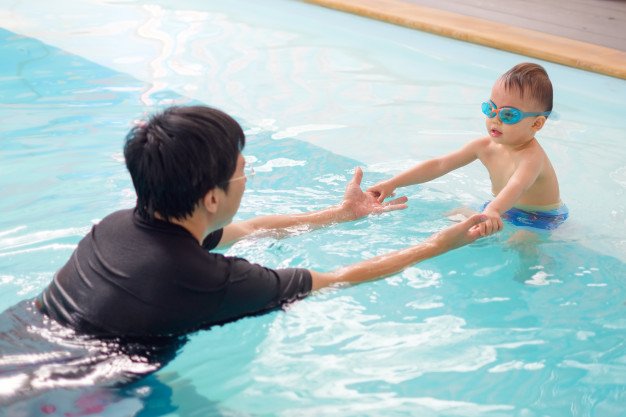
Toddler Swimming Lessons

Drowning is more common for children ages 1 to 4 than it is for older children and early teens, and drowning rates are highest between ages 1 and 2. For this reason, it is recommended that children start swimming lessons as early as possible when they are toddlers.

Ideally, knowing water safety and how to conduct yourself in a pool is beneficial for a child to know before they can walk. As any parent knows, once children start walking, they don’t stop and will take off running in any direction without warning. If a pool or body of water is in that direction, they could drown before a parent has time to reach them. The same goes for children who can crawl – they can just as easily crawl into a pool. However, if they end up near the water and have a basic knowledge of swimming, they’re more likely to be able to conduct themselves safely. This knowledge may not stop them from drowning, but it will certainly lower the odds and give them a fighting chance.

Should Babies Learn to Swim:


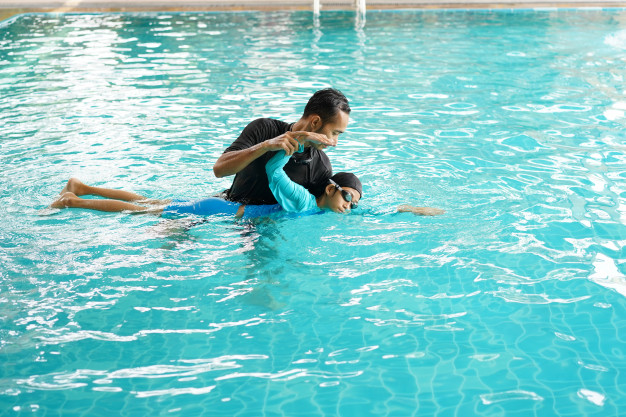
Clearly a baby won’t be able to swim until they are a little older, but enrolling your baby in an infant swimming lesson program is generally a good idea. Infant swimming lessons can help babies to adjust to being in the water, as well as learn basic concepts such as floating that they will be able to build upon later. Typically, these classes teach skills such as showing babies how to roll over onto their backs so that they can breathe if they end up in the water.

These classes often involve parents, which is a helpful idea to provide parents with more knowledge about water safety and keeping their baby protected. This is also a great way to ease into the idea of having your children learn to swim.

Regardless of what age you decide to do it, you should be enrolling your children in a learn to swim program at some point in their young life, for their protection and yours. Swimming is something kids enjoy, and giving them the skills and knowledge to be safe while doing so can help make a difference as they grow up.

Read Also:

Content Rally wrapped around an online publication where you can publish your own intellectuals. It is a publishing platform designed to make great stories by content creators. This is your era, your place to be online. So come forward share your views, thoughts and ideas via Content Rally.

View all posts

Leave a Reply

Your email address will not be published. Required fields are marked *

Related

dressing

Dressing Up Your Babies: How Hard Is It?

Choosing what clothes to wear every day can be one of the trickiest things to do. The idea of matching clothes that depends on which occasion you’re going can be exhausting and tiring. Some people enjoy this, but most of us don’t. What’s funny is that we can’t escape this chore for the rest of our lives. As a parent, you are now in control to determine what is the good or bad fashion for your baby.  And admittedly, this is still not easy. Lucky you, here are a few tips on what to keep in mind when choosing clothes for your babies Winter, Spring, Summer Or Fall It is important to choose what clothes best fit your children; however, it is far more important to prioritize your children’s welfare by identifying the season and temperature in your area. Toddlers or children aged 0-3 years old tend to be easily sensitive when it comes to the clothes they’re wearing. Therefore, having research on what can easily irritate their skin, especially on this continuous climate change, must be one of the things you should know first before choosing their fashion for the day. Make Sure It’s Comfy and Easy to Dress and Undress Children can be easily irritated at any time of the day. Once this happens, you’ve got to make sure that you’ve got it all covered. Putting clothes that can be easily undressed like pants, t-shirts, or shorts must be one of your options in choosing your children’s clothes. You may also teach your children to decide what clothes to wear. In this way, they will have the authority to choose what they want and what clothes they are comfortable to wear. Choosing What Type of Cloth or Fabric You’re Going to Get Trending fashions for babies are important but choose it carefully. Since many stores offer baby clothes, it is a general rule to look for items that don’t have too many details on it. Though it can be considered cute, not all clothes are acceptable to children. Know What Occasion In order to showcase your children’s style in fashion, you have to first find out what occasion or theme your baby is going to attend. Whether it’s for Christening, birthdays, holidays, etc. finding clothes that are a match to the occasion is a must. Interestingly, an online baby boutique named BK (Baby’s and Kids Boutique) offers this wide variety of baby clothes prioritizing your baby’s safety while having an Instagrammable fashionista baby. With their newest set of baby wears like christening gowns Canada, your children will be the center of the crowd every holiday. And as for christening gowns, Canada, Baby and Kids’ Boutique should be your choice of store. Make It Simple The last tip for mommies and daddies is that simplicity is beauty. Children, particularly babies, are already cute. Though it’s fun to mix and match outfits, having them put too extra clothes on their bodies can already be unpleasing—not just for other people but for the children themselves. Put clothes that are lightweight, easy to wear, and simple. Read Also: Why Baby Formula Should Be A Consideration For All Parents How To Choose The Best Toys For Your Baby

READ MOREDetails
Welcoming And Safe Environment For Foster Children

How To Create A Welcoming And Safe Environment For Foster Children

Opening up your home to a foster child can be a deeply fulfilling way to make a difference in a young person's life. However, welcoming a child from a difficult background also requires thoughtfulness and understanding. Foster children have frequently endured upheaval and distress. Providing real stability and comfort demands sensitivity, perseverance, and devotion. Here are some tips to help make the transition smoother for everyone. Ways To Create A Welcoming & Safe Environment For Fostering Children  There are several ways you can adopt to create a safe environment for fostering children. You must be well aware of it while reaching your objectives with ease. Ensure that you know the process from your end while meeting your needs with ease. 1. Meet Basic Needs Before focusing on higher needs, make sure your foster child's basic physical and emotional needs are met. Have their bedroom fully furnished and decorated to their age and tastes. Stock up on any preferred foods and toiletries. Find out their clothing size and provide weather-appropriate options. You can use your fostering allowance for this. Verbally reassure them that they are welcome, wanted and will be well taken care of. Consistency, routine and nurture help provide a sense of safety. 2. Allow Time To Adjust Moving into a foster home is a major life change. Don't expect your foster child to immediately feel at home and bonded with you. Comfort levels and trust develop gradually. Avoid overloading them right away with new places, people and activities. Provide downtime to settle in. Let them dictate the pace of building relationships, not vice versa. Respect their personal space. Patience and small gestures like smiles go a long way in making children feel accepted. 3. Create Rituals And Traditions Routines help provide stability and familiarity. Establish daily rituals like a welcoming hello/goodbye, bedtime stories, or mealtime check-ins. Plan weekly activities to look forward to, like pizza Fridays, bike rides, or volunteering at an animal shelter. Monthly traditions might include baking favourite treats, watching movies, or visiting parks. Ask for input on what rituals or traditions they might enjoy. Foster children crave consistency and participation. Read Also: Is it Possible for Single Individuals to Become Foster Parents? 4. Display Their Identity To help foster children claim their space, decorate their room and common areas with their own artwork, photos, collections and personal touches that affirm their identity and interests. Set aside areas where they can keep sentimental objects from their past life safely stored but accessible. Ensure they have enough secure storage space. Visual reminders of who they are help instil belonging. 5. Promote Open Communication Creating psychological safety hinges on open communication free of judgment. From the start, establish the ground rule that all feelings are welcome to be shared without fear of negative reaction. Actively listen with empathy when youth express difficult emotions from past experiences. Avoid insisting on eye contact. Provide multiple outlets like talking, writing and art for processing feelings. Work through tension calmly with "I" statements and apology/forgiveness. 6. Respect Privacy And Autonomy To build trust, respect a young person's need for privacy and autonomy over their personal domain. Knock before entering their bedroom and bathroom. Avoid invasive questioning. Let them choose when to share information about their past or thoughts. Support healthy independence appropriate to their age in decision-making over aspects like clothes, hairstyles, hobbies, and friendships. Upholding dignity helps foster children feel valued and understood. 7. Advocate And Empower As a foster carer, advocate for your foster child's needs at school, in health care, and within service systems. Speak up respectfully to address any bullying, discrimination, or mistreatment they may experience. Promote their strengths and growth rather than focusing narrowly on deficits or diagnoses. Encourage the development of self-care skills, problem-solving, and leadership opportunities that empower them. Instilling self-worth is key to emotional security. Overall, making foster youth feel truly welcome and safe stems from unconditional care and patient guidance at their pace. With empathy, consistency and respect, you can help provide stability and a renewed sense of belonging. The rewarding connections built will enrich your whole family's life. Benefits Of Creating A Safe Environment For Children In Society  There are several benefits to creating a safe environment for children. You must be well aware of it while reaching your goals with ease. Ensure that you follow the right process from your end while meeting your goals with ease. 1. Optimal Development  A safe environment allows children to thrive physically, socially, and emotionally. You need to be well aware of the facts that can assist you in reaching your goals with complete ease. Ensure that you maintain the process of optimal development for your child. This fosters healthy brain development and helps you to maintain the complete development process for your child. It can make things easier for you to reach your objectives with ease. Keep the process in perfect order. 2. Improved Mental Health  Feeling safe and secure can help you to relieve the stress and anxiety of the children to a considerable extent. You must be well aware of it while reaching your goals with complete ease. Additionally, it can boost your mental health to a considerable extent. To foster steady mental growth in your children, the upbringing of the children must be in a safer environment. This can boost the chances of your child’s overall development. Keep things in proper order. 3. Stronger Social Bonds    In a safe environment, children can maintain stronger social bonds with the concerned people. You need to be well aware of it while reaching your goals with complete ease. Keep the process intact while attaining your objectives with ease. Empathy, cooperation, and social skills can help your business to grow at a faster pace. This can boost the chances of your brand value at a faster rate. You should not make your selection and choices on the incorrect end. Furthermore, this can boost the scope of your mental motivation. 4. Reduced Risk-Taking Behavior  Reduced risk-taking behavior can result in a fall for creating a safe environment for your children. You need to be well aware of it while reaching your goals with complete ease. Ensure that you should develop risk-taking behavior. It can reduce the chances of accidents, injuries, and involvement in crime. You must not make your selection and choices on the incorrect end. Keep the process in the perfect order while you want to reach your goals. 5. Enhanced Learning  Children who feel safe and secure are more receptive to learning. The best thing about them is they can adapt to any situation quite quickly. They are better able to focus in school, participate actively, and reach their full academic potential. You must not be able to make your selection and choices on the incorrect end. This will make things too complex for your counterpart. Additionally, these can make things work in perfect order while reaching your goals with ease. Final Take Away Hence, these are some of the crucial facts that you should be well aware of while reaching your objectives with complete ease. Keep the process in perfect order while meeting your goals with absolute ease. Share your opinions with us while reaching your objectives with complete ease. Ensure that you make things work in perfect order. Read Also: Why are More People Heading to Online Colleges? Here Are 10 Tips On How To Get Motivated For Work, School, or Life 7 Reasons Why Online Education is Very Popular

READ MOREDetails
CBD for Kids

CBD for Kids

Since CBD is doing miracles for a lot of adults it is normal to ask about the possibility to use it for kids. People are not only using CBD products for themselves but also for their pets. The results and benefits are the same or very similar because both have the so-called endocannabinoid system. And when it comes to kids, parents want to know more about the benefits and possible side effects. Assuming that you know enough about CBD, we will not dive into details of explaining what CBD is again and again. Instead, we will dive right into the pros and cons of using CBD for kids. Are parents using CBD to help their kids? Yes. Parents around the world are using CBD products such as CBD oils to treat some conditions. Children may suffer from anxiety and hyperactivity and CBD can help against both. And not only that because other parents who have children with autism use it to reduce symptoms of autism. While there is some evidence about the effectiveness and benefits of CBD, more research is underway. That is because some parents are still unconvinced and uncomfortable giving it to their kids. As we mentioned above, the main factor that is pushing parents to try CBD on their children is the fact that CBD helped them well. These parents took the advantage to use it on a daily basis until it worked. Even though a cannabis plant's ingredient, CBD is legal and safe to use without a prescription in most countries. And the list of health issues it fights is long and getting longer after each scientific study. If we are to mention a few health conditions that some children face, then epilepsy, autism, and anxiety are what CBD is successful in fighting. Assuming that you are sure of using CBD oil, then we recommend you buy the best CBD oil out there. Are there any risks of using CBD for kids? Medical cannabis has a rich history of usage, for hundreds of years to be more informative. CBD oil as a derivative of that is still a bit new to the market. That means that this product hasn't been researched enough for use in children. It helps the adults, it helps the animals, and may also help the children. But when it comes to children more studies are needed to find more about its effects. We are saying that because if the child is taking other medications it is not safe to use other compounds without talking to the doctor first. The interaction between CBD and non-all-natural products may produce negative side effects. While CBD oil has shown to be quite successful for the treatment of seizures in kids, for other issues there is little evidence. In conclusion, it is obvious that more parents are using CBD oil for their kids. These parents are also recommending it to other parents stating that it is very beneficial. However, when it comes to you, we recommend that you think of it one more time and always talk to your child's pediatrician. This is a must if your child is taking other supplements. Read Also: The Top Benefits of CBD Oil For Dogs Are CBD Lotions Good For Your Skin? What is the best way to consume CBD? CBD capsules & softgels! CBD the Solution to Insomnia

READ MOREDetails