











The Most Common Causes of Truck Accidents

Published on: 05 February 2020 Last Updated on: 11 October 2021
Truck Accidents

Big rigs, delivery, trucks or any kind of commercial trucks can present some serious threats to other vehicles and passengers present on the road. As per statistics, around five hundred thousand accidents from the total accidents are caused either directly or indirectly by commercial trucks. Out of these five hundred thousand, around five thousand have reported leading to deaths due to truck accidents.

In order to take efficient measures for the prevention of truck accidents, we first need to understand the main causes as well. In this article, we have listed some of the most common causes of truck accidents.

The Most Common Causes of Truck Accidents:

1.Cars Driving in the No-Zones areas

The area behind and beside a truck is known as the ‘No-Zone’ area. A passenger vehicle or car driving in this area automatically puts itself in a dangerous position because the area is not visible by the driver. An accident can occur due to zero visibility.

2. Not Training the Truck Drivers Properly

Driving a truck is entirely different from driving a car and requires an enhanced level of training. Drivers who are not properly trained may not be aware of the safety concerns and important techniques for driving trucks. These drivers, in turn, are more prone to cause accidents later on as well.

3. Speeding and Over Taking by the Truck Driver

Speeding by any kind of vehicle whether it is a truck or a passenger car or even a motorcycle can ultimately lead to an accident. Overtaking while driving especially at high speeds also contributes to a majority of accidents.

Most of the truck drivers tend to over-speed as a result of the unrealistic deadlines given by their companies to deliver goods in a lot of cases. Over-speeding, especially in poor weather conditions, poses a heightened level of danger for all the vehicles present on the road.

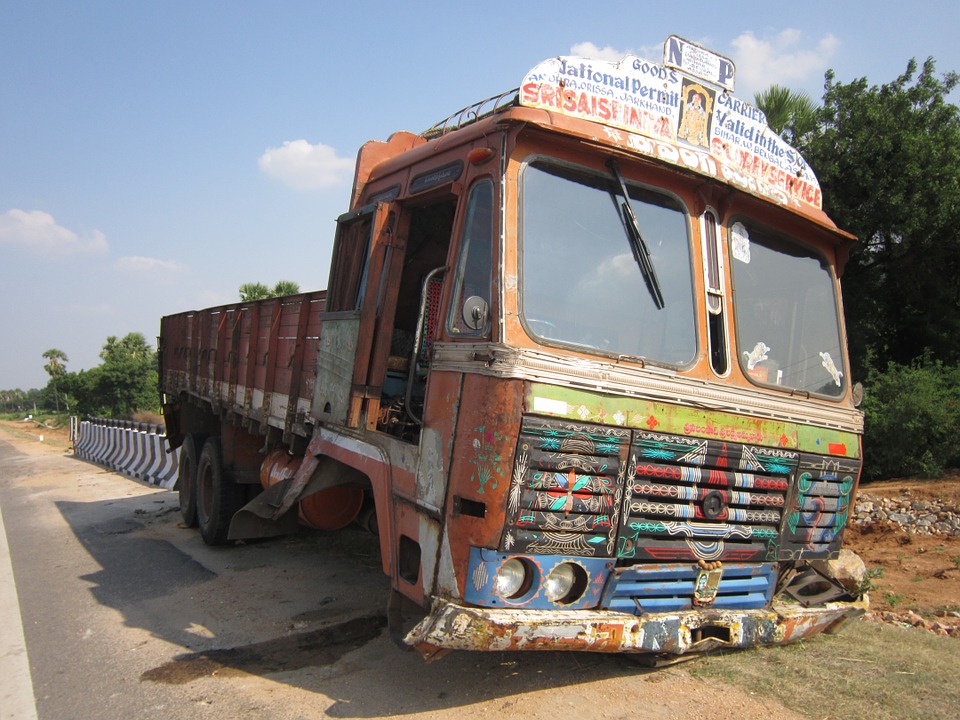
4. Poorly Maintained Trucks or Trucks with Faulty Systems

A truck or any kind of vehicle needs to be properly maintained so that it can function well on the road. If a commercial truck is poorly maintained or consists of faulty systems, then it can lead to critical accidents. Faulty brakes, for example, can lead to an accident if a truck driver is not able to stop the truck at point hence leading to a collision.

5. Distracted Driving and Fatigue

Drivers tend to become exhausted and even bored when they have been driving trucks from a long consistent period of time. As a result, they might be prone to falling asleep on the wheel or may look for distractions to keep them entertained. These distractions can include playing games on their cell phone or speaking on the cell phone while not focusing on the road.

Speak to a Truck Accident Lawyer Today!

These were some of the common causes in brief. In order to learn more in detail for filing a truck accident claim, you can choose to contact the Truck Accident Attorney Chicago for better understanding.

Read Also:

Content Rally wrapped around an online publication where you can publish your own intellectuals. It is a publishing platform designed to make great stories by content creators. This is your era, your place to be online. So come forward share your views, thoughts and ideas via Content Rally.

View all posts

Leave a Reply

Your email address will not be published. Required fields are marked *

Related

Used Car

Used Car Buying – How To Do It Right.

Used cars tend to be the most popular amongst UK drivers and it can be easy to see why. Second-hand cars have a lower purchase price, suffer from less depreciation and there is an endless amount of choice! The main disadvantage of buying a used car is the lack of knowledge regarding its history. When you buy a new car, you will be the first owner and don’t have to second guess how the car’s been treated or if it’s been involved in an accident. Reduce the risk of something going wrong with your next used car purchase by following these top tips below for safe car buying.  Know your affordability.  Before you make any large purchase, you should know how much you can afford to pay for it. This can speed up the buying process if you only shop for cars within your budget. Your budget may be one lump sum to pay for a car with cash or spread the cost into monthly payments with finance. Whichever way you choose to buy your next used car, you should try not to stray from your budget as you may get into a deal that you can’t afford to pay back. Check the market value.  Once you know how much you can spend on a used car, it’s time to see which cars you could buy. A quick internet search of local, trusted dealerships can help you to find used cars you can afford. It also gives you an idea of how much the cars you like would cost. For example, if you’re striving for a used BMW on finance, knowing how much it would cost to buy one can give you an idea of how much your monthly budget could be. Knowing the market value of the cars you want to buy also helps if you’re buying with cash and wanting to negotiate the price. If there’s a similar model from a dealer down the road but with a lower price, you could use this as leverage or get a better deal.  Check credit score for finance. No matter if you’re looking for finance for a Volkswagen or a Porsche, the first thing you should do is to check your credit score. Your credit score can affect your ability to get approved for finance and not knowing where you fall on the credit scale can be costly. A low credit score can make it harder to get approved if your low score is due to missed or late payments in the past or a lack of credit history. This is because you are seen as more of a risk to lenders and are more likely to default on future loans too. If you need to improve your credit score you should do so before applying for finance.  Check insurance rates. If you’re buying your first car, insurance rates can be some of the highest around. Newly qualified drivers are more likely to have a road accident in their first year of driving which bumps up the premium. Searching around for cheaper cars to insure and in your budget could help you save money. buying a used car isn’t just about the initial purchase price but also about being able to afford the running cost too.  Use a reputable dealership.  You can buy a second-hand car from a dealer or private seller but to help protect your purchase, you should consider buying your car from a reputable and trusted dealer in the UK. Buying from a dealer gives you an added layer of protection and means you are covered by the Consumer Rights Act 2015. This act means you are entitled to a full refund, repair, or replacement if the car is not as described or fit for purpose. Check the status of the dealer with the FCA and read verified reviews of other customers before committing to the sale.  Check the history of the car. Used cars run the risk of having a hidden history but you can check the history of a car you are interested in buying for free. You can check the tax and MOT status of a car and get more information by simply entering the registration number into the DVLA website. You can also make a one-off payment of around £10 with a trusted Car History Check website to see if the car has been stolen, previously written off or still has existing finance on it.  Test drive and check the vehicle.  Before you commit to buying a used car, you should always test drive it first to see how you like it. Take the car out for at least 30 minutes, drive it on different types of roads, and perform maneuvers to get a feel of how it drives. Also, take this opportunity to park up somewhere and check over the vehicle for any imperfections or damage.  Read Also: Beginners Guide To Buying A Classic Car Buying a Used Car? Few Negotiating tips, you can use Used car: simple steps for buying from a reliable cars dealership

READ MOREDetails
Automotive Aftermarket

Key Stats to Know About the Automotive Aftermarket

Riding on the back of the booming Italian and US auto markets and the development of autonomous vehicles, the global automotive aftermarket industry is progressing After over 10 consecutive years of growth following the global economic depression of 2008, the global automotive aftermarket reveals interesting data from the automotive industry. Let's see together what the state of the global automotive aftermarket is and the various future projections. The automotive aftermarket: 2018 in review: The year 2018 for the global aftermarket ended positively. According to data processed by the ANFIA Components Group, the turnover of the spare parts increased by 0.8% last year compared to 2017. Looking at the performance of individual product families in Italy, 4 out of 5 have a positive trend. The body and interior components had significant increase while in 2017, they had remained substantially stable. This was followed by increases in electrical and electronic components which recorded the greatest contraction in the previous year. The only parts with a negative sign in 2018 is that of engine components (-7.9%), which worsens its performance compared to 2017, when it had closed at -0.2%. Analysts point out that the two-figure increase recorded by the family of body and interior components. In this case, one can link to the fact that the renewal of the Italian fleet, which has now reached a median age of almost 11 years for passenger cars, proceeds slowly. According to them, this helps to ensure some continuity in maintenance work for older vehicles.   You Must Know about the Aftermarket review in 2018: On the family of electrical and electronic components, researchers must say that, the increasingly central electronics and telematics had great roles to play here. While on the one hand, they have contributed to reducing the margin of human error in maintenance and repair operations. The electronics and telematics aftermarket offer products that are more reliable and safe. This market has also increased the sale of spare parts of this type and the maintenance and repair interventions on increasingly complex components. On the other hand, the decrease in the turnover of the engine components can be attributed in general terms. According to ANFIA, to the fact that the increasingly high level of quality of the components of the car, guarantees an extension of the average life. This, for complex systems such as the engine system, means that no replacement or repair work is necessary without major failures. Aside from the above information, there are hundreds of other trends and statistics to consider when it comes to the automotive market. Let’s take a look at them, shall we? Trends and statistics in the global automotive aftermarket: 1. In the last decade, the average usage of the vehicle fleet in the US has increased by about 17% 2. The length of use of new and already used vehicles over the last decade has increased by 60% 3. While 25% of the auto spare parts repair is handled by dealerships, 75% is done by independent repair shops. 4. 56% of automotive decision-makers predict a 30 to 50% decrease in the number of physical outlets by 2025, according to KPMG. As is with virtually all merchandise around the world, the automotive aftermarket industry is going electronic (online) and its marketplace is evolving. Parts and even repair services are being sold and offered online.   Additional trends and statistics in the global automotive aftermarket: 5. The irruption of the autonomous vehicle into the public space would offer more flexibility and profitability for all stakeholders. For example, 43% of respondents in a study conducted by KPMG say that current vehicle owners no longer plan to own the traditional car by 2025. 6. One can't expect the demand for diesel engine replacement to thaw out quickly. Although diesel has become politically and socially unacceptable in many countries, the use of this fuel remains technologically and economically relevant for 50% of decision-makers worldwide. This figure even increased by 3 points in 2017 and illustrates the uncertainties that manufacturers face in this transition period. 7. As the world continues to anticipate the mass production of autonomous vehicles, the market is bracing up for an increase in demand of auto cooling systems such as the small AC compressor offered by Rigid for electric vehicles and car cabins. According to a report by Transparency Market Research, the automotive cooling system market will exceed $64b by 2026. During the period of forecast, the CAGR is expected to expand over 4%. Read Also: Pros And Cons Of Buying A Used Car 2018 Tesla Model S: The Complete Electric Vehicle 6 Reasons Why Vehicles Are Now Safer Than Ever

READ MOREDetails
Car Rims

What Do You Need To Change Car Rims?

If you’re a regular car user, changing your car rims is something that you might only do if they either get scratched by a pavement, or they get completely worn out.  For car enthusiasts though, this is a completely different story. Car lovers are known to tweak certain things about their cars just to make things look, sound or even feel better. Most of them do it as a hobby and are even prepared to spend top dollar in their quest to alter or improve the condition of their cars. If you think that this is a hobby that you could easily take to, then one of the parts of your car that could be easier, to begin with, is your car rims. For those that are completely clueless about cars, a rim is the cylindrical outer edge of a wheel that supports and holds the tire to it. They are definitely among the most noticeable parts of a car. For any true car enthusiast, having a set of rims that complement the car’s aesthetic appeal is very important. You might choose to have them off-the-shelf or get customized diamond-cut alloys. In fact, you can opt to design and personalize your own from scratch thanks to modern-day technology. Wheels vary in size and style, and this can adversely affect the type of car rims. Bigger wheels are considered sportier and are ranked higher, but they also come with their fair share of cons. Be ready to experience a change in fuel consumption, steering performance, speedometer reading, and quick tire wear if this is what you’d like to go for. A good rim is one that fits well in the tire. As it rotates around the tire nods, the contact that occurs produces friction that helps the wheel turn. You don’t want to have a set that interferes with your wheel turns, so it is advisable to seek help from a rim professional before purchasing any set. This will ensure that you get the most worthy set for your car. When it comes to types of rims, the steel rims are more affordable and are usually covered by a hubcap to make them more appealing. They are also heavier than other rim materials. The aluminum rims are stylish and durable, while the carbon-fibered ones are newer, durable and light-weighted. This helps a lot in the conservation of fuel. Simple steps to guide you when replacing your car rims: Installing new rims isn’t hard, but it requires careful execution and the right set of tools to make sure it’s done correctly. Be sure to follow these simple steps to guide you when replacing your car rims at home. 1. Select and buy New Rims The whole rim replacement process begins by purchasing a new set. You can do this by visiting various local auto parts dealers in your area. You can also opt to check online from a well-known shop that offers stylish yet durable rims. You’ll also have to give a bit of thought into the color. Red rims tend to provide a more personalized look while chrome rims give your car a nice and noticeable shine. Black rims tend to be more popular within the younger generation as it gives the vehicle a darker curbside appeal. Don’t forget to check the weight of the rim as this affects your vehicle’s overall performance. Also, be sure to match your new rims to your current tires. The diameters of the new and old set should be equal. You’ll also need to check whether the bolt patterns and bore circle diameter are similar in order to perfectly fit. Collision might occur if the rims aren’t fitting. 2. Make sure the Vehicle is Stable. Ensure you have a flat and level spot to park. For automatic cars, be sure that the car is in the park and the emergency brake is secured. We don’t want the car to accidentally roll forward or backward. Instances where the vehicle rolls are very common. This is especially when you end up rushing the process without paying much attention. This often happens to people who are removing a wheel for the very first time. You can use a piece of wood, a rock, brick or any other firm item that is a few inches high to support the wheel. 3. Lift the car and Remove the Wheel You’ll need to start off by removing the hubcap using a screwdriver. Similar to changing a tire, look for notches or grooves under the car where you can safely place the car jack. Take the car jack and use it to slowly raise the wheel until a bit of the weight has been taken off the wheel. Slightly raising prevents the whole wheel from turning as you loosen up the nuts. Apply force while removing the lug nuts as they’re usually tightened up pretty good. Before you loosen the nuts all the way, pump the jack and completely lift the wheel off the ground, but do not overly suspend it in the air. Then, use a socket wrench to turn the nuts counterclockwise. Make sure not to lose the bolts as they will be used with the new rims. Remove the wheel and lay it flat on the ground. 4. Remove the Old Rim Let the air out of the tire because it’s harder to remove the rim with all of it still in there as it will require more effort and take more time. Insert a tire lever on various points of the wheel; be careful not to damage the tube. Once done, go ahead and pry the old rim off the tire. You can also apply oil around the edges of the rim to make it easier for it to pop out. Make sure to do it evenly so as to prevent the rim from bending. Cheaper rims tend to bend easily and this makes them unable to be re-used once damaged. 5. Attach the New Rim Be sure to remove any dust from the side tubes and tires by using a wire brush. This will provide a clean and even mounting surface. After attaching the new rim, re-inflate the tire by using an air compressor. Carefully place the tire back on the hub and align the rim with the car’s wheel bolts. You can use your hands to screw in the nuts before you pick up the torque wrench. It is important to note that each vehicle has different torque specifications that are set by the manufacturer. So before you purchase one, make sure you look for one that is compatible with your car. They are a bit pricey and if you want a quality wrench you might have to spend close to $100. The car jack is used to apply a specific force to a bolt and prevent over-tightening. They make sure the wheel nuts are neither too tight nor too loose. These torque wrenches come in four styles; dual beam, bending beam, digital beam, and the click style. For the clicker, you’ll hear a click sound from the wrench once the required torque is attained. After you’re done be sure to reset the wrench to zero. This will help keep it calibrated for longer, but in case you happen to damage it, you can get it repaired by taking it to your nearest auto dealer shop. 6. Carefully Lower the Car to the Ground After you’re sure that everything is well in place, slowly lower the car to the ground until the tires have taken back the vehicle’s weight.  Afterward, proceed to gently remove the jack. Once done, attach the hubcap and repeat these steps on the rest of the wheels. When all the rims have been replaced, you’ll need to check the alignment of each wheel. You can do this through a test drive to be sure that the rims won’t pop off. Try and keep a low speed as you do so. In case the vehicle isn’t stable, you can go to your nearest shop and have a professional fix the issue. For all automobiles, the right set of rims is important.  This is because they contribute towards whether your ride will be smooth or rough. Comfort and durability come first for many drivers.  As you might have seen from the outlined steps, replacing an old rim isn’t necessarily difficult. Yes, it might take time, but the final result will be worth it. Be careful not to damage the rims or puncture your tires during the whole process as this will end up costing you, instead of saving your coins. If you still feel like you can’t manage the rim change on your own, remember, asking for help is always an option. Don’t hesitate to ask for assistance from people who are more familiar with such situations. It’s better to have it done well and ensure the durability of the car rims. Cars can say a lot about their owners. What does your car say about you? Read Also :  Useful Tips About Mobile Car Detailing To Avoid Any Costly Maintenance And Repair Issues Washing Your Car: 7 Dos And Don’ts

READ MOREDetails