











Cattle Feed: Fueling The Health And Productivity Of Your Herd

Published on: 08 August 2023 Last Updated on: 14 September 2023
Cattle Feed

Are you looking to maximize the health and productivity of your cattle herd?

Look no further than the importance of proper cattle feed. Fueling your herd with the right nutrition is essential for their well-being and overall performance. Understanding the nutritional needs of your cattle is crucial to ensure they receive the proper balance of nutrients. This research-based article will guide you through the process of choosing the right feed for your herd, managing their feeding strategies, and monitoring their health and performance.

By following these guidelines, you can maximize the productivity and profitability of your herd. Don’t underestimate the power of proper feeding – it can make all the difference in the health and success of your cattle. Get ready to take your herd to the next level with the right cattle feed.

The Importance of Nutritional Balance

Feeding your cattle a well-balanced diet is like fueling their bodies with the perfect blend of nutrients to keep them healthy and thriving. Nutritional deficiencies can lead to a range of health issues and decreased productivity in your herd.

By ensuring that your cattle receive the right balance of proteins, carbohydrates, fats, vitamins, and minerals, you can optimize their feed conversion efficiency. Feed conversion efficiency refers to the ability of cattle to convert the feed they consume into body weight gain. When your cattle have a balanced diet, they can efficiently convert feed into energy, resulting in improved growth rates and overall performance.

Adequate nutrition also plays a vital role in the prevention of diseases and enhances the immune system. Therefore, investing in well-designed and nutritionally balanced cattle feed is essential for the health and productivity of your herd.

Understanding the Nutritional Needs of Cattle
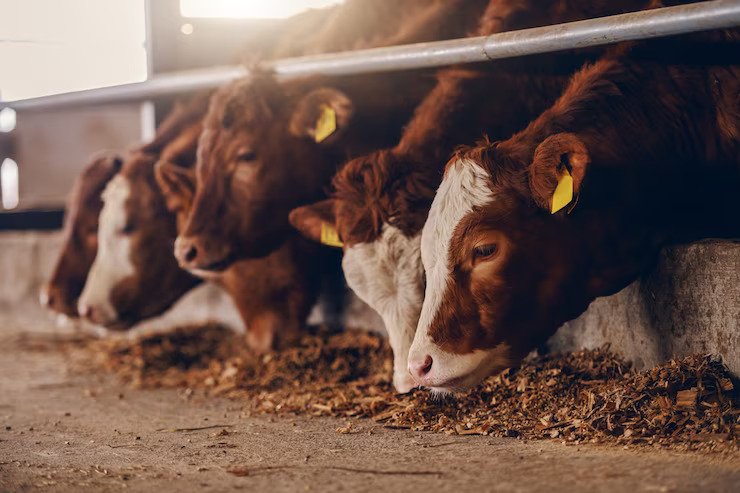
Nutritional Needs of Cattle

Understanding the nutritional needs of cows is crucial for ensuring their well-being and maximizing their performance. When it comes to cattle feed, protein requirements play a vital role in maintaining the health of your herd. Protein is necessary for muscle development, milk production, and overall growth.

It is essential to provide a balanced diet that meets the protein needs of your cattle, especially during periods of high production, such as lactation or growing stages. Incorporating high-quality protein sources, such as soybean meal or alfalfa, into their feed can help meet these requirements.

In addition to protein, mineral supplementation is also important for cattle nutrition. Minerals like calcium, phosphorus, and magnesium are essential for bone development, proper muscle function, and overall metabolic processes.

Deficiencies in these minerals can lead to health issues and reduced productivity. Providing mineral supplements in the form of blocks or loose minerals can help ensure that your cattle receive the necessary minerals they need to thrive. Regular monitoring of mineral levels and adjusting supplementation accordingly is crucial for maintaining optimal health and performance in your herd.

Choosing the Right Feed for Your Herd

Selecting the appropriate nutrition for your herd is crucial for maximizing their performance and ensuring their well-being. When it comes to choosing the right feed for your cattle, it is important to consider the various feed options available and their suitability for meeting the dietary requirements of your herd.

There are several feed options to consider, such as pasture, hay, silage, grains, and supplements. Each option has its own nutritional composition and benefits. Pasture provides a natural grazing option, while hay and silage offer preserved forage. Grains and supplements can be used to supplement the diet and provide additional nutrients.

To make the right choice, it is important to understand the dietary requirements of your herd, including their energy, protein, mineral, and vitamin needs. Consulting with a nutritionist or veterinarian can help you develop a balanced and appropriate feeding program that meets these requirements.

Selecting the right feed for your herd is essential for ensuring their health and productivity. By considering the various feed options and understanding their dietary requirements, you can make informed decisions that will optimize the performance of your cattle.

Feed Management and Feeding Strategies

To optimize the performance and well-being of your livestock, it is imperative to implement effective feed management strategies that consider the nutritional requirements and feeding patterns of your animals. One crucial aspect of feed management is proper feed storage. It is essential to store your cattle feed in a clean and dry area to prevent spoilage and contamination.

This will ensure that the feed retains its nutritional value and does not lead to health issues in your herd. Additionally, incorporating feed additives into your feeding strategies can also greatly benefit your cattle. These additives can include probiotics, prebiotics, and enzymes, which help improve digestion and nutrient absorption in your animals. By implementing sound feed management practices and incorporating feed additives, you can fuel the health and productivity of your herd.

Monitoring and Evaluating Cattle Health and Performance
Evaluating Cattle Health

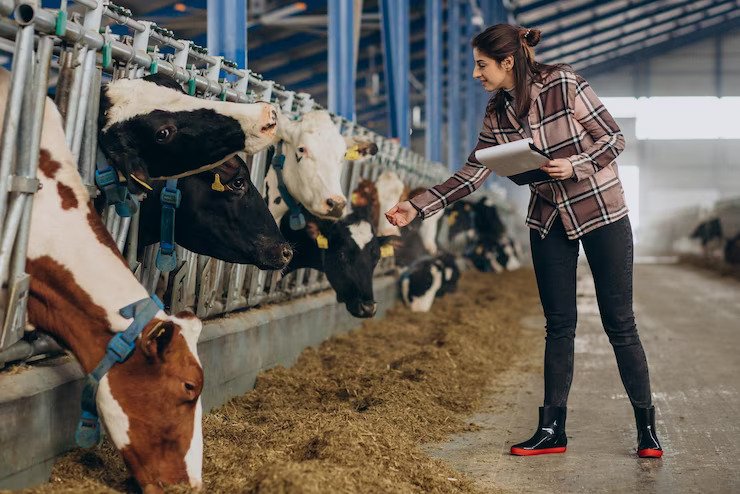
Keep a close eye on how your cows are doing and make sure they’re feeling their best by regularly monitoring and evaluating their health and performance. Disease prevention is crucial in maintaining the well-being of your herd. Implementing vaccination programs and practicing good biosecurity measures can significantly reduce the risk of diseases spreading among your cattle. Additionally, performance tracking is essential for optimizing productivity.

Keep records of weight gain, feed consumption, and reproductive performance to identify any issues and make informed management decisions. Regularly assess body condition score and observe for signs of lameness or respiratory distress. In case of any abnormalities, consult with a veterinarian to promptly address potential health concerns. By monitoring and evaluating the health and performance of your cattle, you can ensure a healthier and more productive herd.

Maximizing Productivity and Profitability through Proper Feeding

In order to maximize the productivity and profitability of your herd, it is crucial to implement proper feeding techniques and ensure high feed quality. The health and performance of cattle are directly influenced by their diet, and providing them with the right nutrition can significantly impact their overall well-being. Feeding techniques such as ration balancing, forage management, and feed additives can help optimize nutrient intake and support optimal growth and development.

Additionally, monitoring and maintaining feed quality is essential to ensure that the cattle are receiving the necessary nutrients. This involves regular testing of feed ingredients, proper storage and handling techniques, and minimizing feed spoilage. By prioritizing feeding techniques and feed quality, you can fuel the health and productivity of your herd, leading to increased profitability and success in the cattle industry.

Conclusion

In conclusion, ensuring the health and productivity of your cattle herd relies heavily on providing them with a balanced and nutritious feed. By understanding their specific nutritional needs, selecting the right feed, and implementing effective feed management strategies, you can optimize their performance and profitability. Regular monitoring and evaluation of their health and performance will help you make necessary adjustments to their feeding regimen. Remember, proper feeding is the key to fueling the success of your herd.

Read Also:
Nabamita Sinha loves to write about lifestyle and pop-culture. In her free time she loves to watch movies and TV series and experiment with food. Her favourite niche topics are fashion, lifestyle, travel and gossip content. Her style of writing is creative and quirky.

View all posts

Leave a Reply

Your email address will not be published. Required fields are marked *

Related

Defence Dogs

How does the Training of Defence Dogs Look Like?

Defence dogs have special features that make them suitable for this purpose. Before the dog is admitted to defence training, he has to complete a course for a 1st degree companion dog. This gives confidence to the trainer that the dog understands the basic commands such as summoning, fetching, "sit", "go", and walking on a loose leash or even without a leash. In addition, defence dogs should be very disciplined. The first step is, of course, to choose the right breed. The breed that has an internal defense reflex which tells them when their owner is in an emergency situation. The most popular dog breeds for defence include:  Amstaff, Bullmastiff, Bulterier, Doberman, Boxer, German Dog, French Shepherd, and Caucasian Shepherd. Choosing a particular puppy can’t be a matter of chance. The animal should come from a registered kennel and preferably have a pedigree. The problem with these breeds is that they are prone to aggression, so it’s important to bring up such a dog using appropriate forms of training. A well promising defence dog shouldn’t show too much aggression. The training requires a lot of patience and commitment of the caregiver and starts only when the dog is taught obedience, walking by the owner's leg and self-control. The trainer takes part in the training together with is assistant. The dog is taught to attack when it hears the command "take". He cannot attack the assistant even if it’s against the owner's will. The only exception to this rule is the situation of a direct danger, for example when the assistant attacks the trainer, then the dog should throw itself at him. However when the assistant takes a defensive stance, the dog cannot attack him, but it has to guard him. Unfortunately, due to the natural aggression of these breeds, it’s sometimes really difficult to control them in such situations. Nevertheless, the defensive dog should stay loyal to his master, have sympathy, fidelity, and trust. The dog's behavior cannot be unpredictable, and that’s why dogs with a pedigree are chosen for this job because we can be sure that the animal will meet these criteria. Hidden aggression can never be directed towards the master. In addition, the dog must observe the surroundings and know for himself when the master is in an emergency situation and needs help.  In addition, the external appearance of the dog, which is often able to scare the attacker just with its silhouette, shouldn’t be insignificant. Unfortunately, the dogs performing such a role are often poisoned, so well-trained dogs should only eat food given to them by their master. For defence training, apart from the dog, we need an assistant. He should be dressed in a special suit or hand guard. The purpose of the first stage of training is to irritate the dog to the point when he can learn the skill of grabbing a sleeve or a teether. The success of this exercise depends on the behaviour of the master, who must hold the dog on a short leash and encourage it to attack. He can do it by running, shouting, or waving a baton. Meanwhile, the assistant tries to provoke the dog to attack him. At this stage of learning, we do not use coercion. If the dog behaves correctly, the master praises him, which encourages the dog to continue the exercises. If the dog succeeds the master should reward him for that immediately. After a few lessons the trainer is able to control the dogs aggressive behaviour. For example, he can successfully command the dog to stop attacking the target. When the dog has mastered the "take" and "let go" commands, the trainer can move on to more advanced exercises. How to train defence dogs? - A dog that goes by the foot of his master has no right to pull itself forward, bark or behave aggressively. Training a dog requires a lot of patience and determination. - During the training, the trainer cooperates with the assistant. If he tries to run from the dog and the trainer does not give a direct order to attack, the dog cannot pull himself out and throw behind him in pursuit. - The dog cannot attack the assistant when we show a defensive attitude. When the aggressor is still, the dog will proceed to guard him until the master arrives. How to stop the dog from attacking someone: In the case of training a dog with an innate tendency to aggression, surprises can happen. The most important thing is to know what your dog can do. Stopping such a trained dog from attacking someone randomly on the street is really difficult and often ends in the death of the dog. When it happens, you shouldn’t try to kick the dog with your legs, because it will only enrage it more. That’s why the owner should learn how a stun gun works. It’s the best way to effectively stop the dog from attacking someone with the smallest chance to kill it. Characteristics of a good defence dog: When we buy a pedigree puppy from a proven breeding, we can be sure that it has an innate tendency to perform the function of a defensive dog. We should anticipate the behavior of the dog by which we must be sure that the dog will not hurt us. How to take part in defence training if we can't judge whether the dog will not direct the aggression towards us? We have to teach obedience to the dog. The biggest difficulty is to learn how to walk by the leg and stay on a loose leash. The defence dog must be vigilant and it should inform us about the dangers ahead. Even when the aggressor is still, the animal cannot stop watching him. Perseverance in battle and stubbornness are the hallmarks of defence dogs. A defensive dog cannot be bribed. The attraction with treats and distraction are common methods used by aggressors. How much does a defence dog training cost? Dog training takes place at the time set by the training centre and usually lasts for about 40 hours. The price of the courses varies between 500-1000 Euros. Read Also: Can Dogs Make The Anti-Social Kids Socialize Better? Can Dogs Help Writers Stay Positive During Stress?

READ MOREDetails
dog

10 Reasons Why Your Dog Can Breathe Fast?

Dogs are active and energetic pets, who are always up to games and new experiences. So, it’s obvious that the dog can breathe fast from time to time. The question here is how to determine normal and abnormal breathing, and when the dog owners should worry about their furry friend. Fast breathing is a common situation for all dogs, regardless of their breed, age, and size. Fast breathing is a change in the breathing rate of the dog compared to its normal breathing. Dogs at rest have a normal respiration rate of 10 to 35 breaths per minute. The average dog at rest takes 24 breaths per minute. If you encounter such a problem as a dog respiration rate high, then it can be either a normal situation or a symptom of different health issues. Here is the information about the reasons for the dog’s high respiratory rate. 10 Reasons Why Your Dog Can Breathe Fast? 1. Overheating : Panting is one of the earliest and most common signs, so pay attention if your dog is panting excessively when the temperatures have soared. Breathing is usually fast and noisy. Other symptoms of overheating are sticky gums, abnormal thirst, a dark tongue, increased temperature and heartbeat, glazed eyes. This condition is extremely dangerous because if the body temperature exceeds 109°F (a dog’s normal body temperature is 100-102.5°F), heatstroke occurs. It leads to kidney damage, seizures, brain swelling. 2. Pain/Anxiety : Dog breathing heavily may indicate that the pet suffers from internal or external pain. In this case, make sure that your dog doesn’t have an injury – caress the dog from the neck, through the abdomen, and to the legs. Watch for a reaction. Besides, if the pet is stressed out, then panting may be a sign. There are various reasons for stress: punishment, a visit to the vet, inconsistent training, new experiences, changes in the environment. Some breeds are very sensitive and even minor changes can cause anxiety. 3. Poisoning : If your dog breathing heavily, it can signify poisoning. Dogs like trying new things and they shouldn’t necessarily be edible. Of course, this behavior can lead to poisoning. Check whether your dog can eat an obstruction (e.g. chicken bones), toxic foods (chocolate, fruit with seeds, nuts, onions), a toxic plant or household substance. If your pet has swallowed something, then an immediate visit to the vet is a must! 4. Different Health Issues : Dog breathing heavily can be a sign of many diseases such as heart disease, anemia (caused by a severe flea in puppies and young dogs). Along with this symptom, the dog can suffer from weakness and an increased heart rate. 5. Shock : Shock can be life-hazardous because in this case, the body systems don’t receive enough blood to work properly. There can be different types of shock. Thus, septic shock can be caused by different diseases such as heart failure. Another type of shock is caused by an allergy to food or insect bites. 6. Acid-Base Disorders : Some chronic problems cause certain changes in pH balance, and these changes can result in fast breathing. 7. Upper Airway Obstruction : Brachycephalic breeds or those breeds that have narrow airways, tend to snore. If these dogs suffer from illnesses, connected with inflammations and swelling, then it is difficult for them to get enough oxygen and they breathe faster. 8. Fluid in the Lungs : Dog breathing fast at rest is an everyday occurrence, and one of the reasons in the fluid in the lungs. Actually, some amount of fluid is always present in the dog’s lungs, but an excessive amount can be dangerous. Other signs are low body temperature, blue gums. 9. Cushing's Disease : A dog with adrenal glands, releasing too much cortisol, has Cushing’s disease. Cortisol is known as a hormone of stress, it results in high blood pressure and increased panting. However, this is not the only symptom. Other signs are weight gain, increased urination, hair loss, thinning skin. 10. Swollen Belly : If your dog has an unusual shape of the belly due to bloat or a buildup of fluid in the abdomen, then it can breathe fast. It puts pressure on the diaphragm and that is why the dog can’t take deep breaths. In this case, your dog needs veterinary attention. Thus, fast breathing is a common situation because it is needed for temperature regulation. However, in some cases, it can be a sign of any health problems. Pay attention to the general well-being of your furry companion, pay attention to the accompanying symptoms, and if it is necessary, see the vet.  Read Also : Can Dogs Make The Anti-Social Kids Socialize Better? Can Dogs Help Writers Stay Positive During Stress? 5 Reasons Why Your Child Needs A Dog  

READ MOREDetails
CBD Oil

Is CBD Oil & Edible Treats Safe for Pets – Dogs & Cats

CBD oil is on the rise among individuals as well as pet owners. Learning about CBD and how it helps different ailments many people have got on board. Who can use CBD oil and what is CBD oil? What are the side effects of CBD oil the good ones and the bad ones? What is CBD oil? CBD oil is cannabidiol; which comes from hemp. Hemp produces chemicals that can be extracted for homeopathic remedies. CBD oil derived from hemp contains less THC than that of its relative to the marijuana plant; therefore you will not get your pet high from the amounts of THC in the CBD oil according to SimplyPets.com. When CBD is used it affects the endocannabinoid system, which all mammals have. Researchers have found that phytocannabinoid cannabidiol is also responsive to the system as our bodies naturally produce certain cannabinoids. This research has claimed that cannabinoids such as CBD have been found useful in helping many ailments. How can CBD oil help pets? Many pets go through changes in their lives such as aging. When we as humans grow older we slowly develop conditions that cause inflammation, pains, digestive issues, cancers, and many other illnesses. Pets go through a lot of these same conditions.  Pets develop stress and anxiety that CBD oil can help with. CBD uses the endocannabinoid system to mimic our bodies’ natural receptors to help with pains, moods, and emotions. The natural ones our bodies make are more localize and don’t travel far. Side effects of CBD oil: The side effects of CBD oil in pets are considered minimal. Pets may get dry mouth from the use of CBD oils as CBD can decrease saliva production. Lowered blood pressure is another possible symptom of a temporary side effect. Pets may also experience bouts of drowsiness. These are the most common negative side effects of CBD oil found. The positive side effects of CBD oil include being more playful. This is because they have less pain and inflammation which are also side effects of using CBD oil. Pets may be able to handle noises and strangers better as CBD oil also helps calm their nerves; helping with stress and anxieties.  Pets may appear to be less grumpy due to CBD oil helping with pains and inflammations. Is CBD oil safe for pets? CBD is being tested by researchers to find what all it is capable of; they know that it aids in many benefits. CBD oil is safe for pets in small amounts; pet dosages are a lot less than human dosages as they don’t need as much to help with their illnesses. CBD oil can be given orally if the pet will take it but may need to be mixed in with food. The biggest answer to this question is to ask what medicines your pet is already on.  Are these medications safe, do they have a long list of possible side effects? What are those side effects in comparison to the CBD oil you can give your pet? Read Also: CBD The Solution To Insomnia How Does The Training Of Defence Dogs Look Like?

READ MOREDetails