











Advancing Search and Rescue Missions with Aerial Innovations

by

16 February 2024

Technology

Aerial Innovations

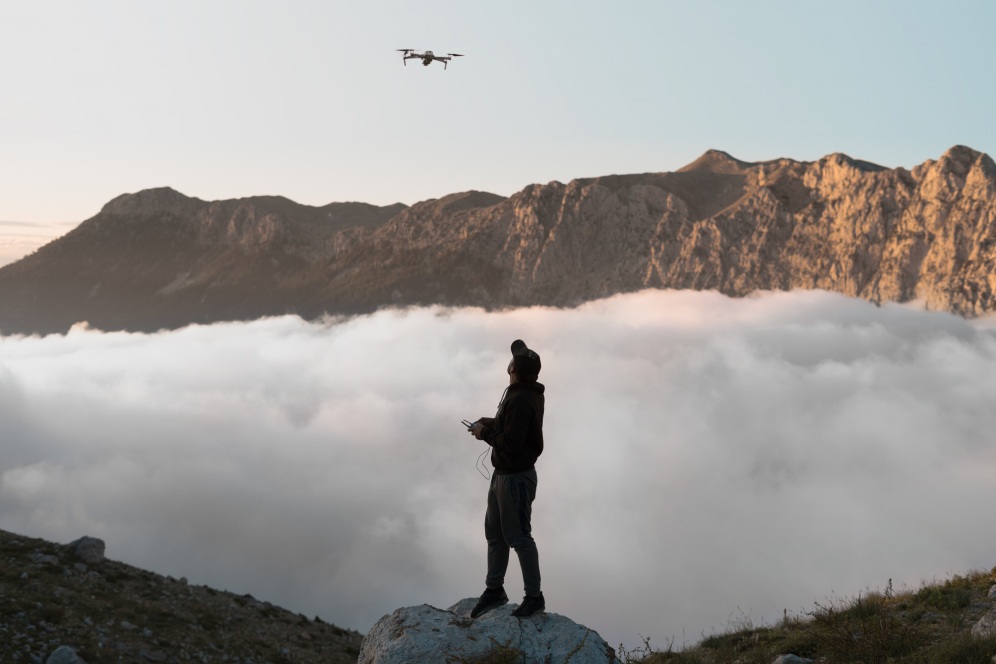
The realm of search and rescue missions is witnessing unprecedented advancements thanks to aerial innovations. These technologies, like drones for search & rescue, are redefining the capabilities of emergency response teams, enabling them to conduct operations more effectively and safely than ever before. This article explores how these aerial innovations are transforming the search and rescue domain, enhancing missions’ efficiency, speed, and success rates across challenging environments.

Enhancing Real-Time Situational Awareness

Enhancing Real-Time Situational Awareness

Aerial innovations have improved real-time situational awareness during search and rescue operations. Drones with high-resolution cameras and thermal imaging can cover expansive areas quickly, providing live feeds to the command center. 

This immediate access to visual information allows rescue teams to assess situations accurately and make informed decisions swiftly. The ability to survey disaster-stricken or hard-to-reach areas from the air has significantly reduced the time it takes to locate victims, evaluate risks, and strategize interventions, ultimately saving lives and optimizing resource deployment. 

Utilizing AI and machine learning (ML) algorithms enhances the analysis of the data collected, helping in the identification of patterns and anomalies that human operators might miss, further increasing the effectiveness of search and rescue missions.

Precision In Search Operations

The precision offered by aerial technologies in search operations is unparalleled. Drones, for instance, can navigate through narrow spaces and harsh terrains, areas where human teams or traditional machinery might struggle or face risks. 

Equipped with advanced sensors, these aerial devices can detect heat signatures or movement, aiding in identifying survivors in dense forests, collapsed structures, or avalanche sites. This precision not only enhances the chances of finding and rescuing individuals but also minimizes the exposure of rescue personnel to potential dangers. 

Drones can drastically improve the outcomes of search operations by pinpointing the exact locations of victims, reducing the time required for rescue, and significantly lowering the risk of further casualties.

Rapid Deployment And Scalability

Aerial innovations enable rapid deployment and scalability in search and rescue missions. Unlike crewed aircraft or ground teams, drones can be launched quickly and in multiple numbers, allowing for simultaneous coverage of vast areas. 

This scalability is crucial in the critical first hours following an emergency when the likelihood of saving lives is highest. The ability to deploy numerous drones at once or in response to evolving situations ensures that search and rescue operations can adapt dynamically to the demands of the mission, covering more ground in less time. 

The agility and adaptability of drones make them an indispensable asset in the arsenal of search and rescue teams, enabling a more responsive and wide-reaching approach to emergencies.

Cost-Effectiveness And Resource Efficiency

Adopting aerial innovations in search and rescue missions introduces cost-effectiveness and resource efficiency. Operating drones or crewless aerial vehicles (UAVs) for surveillance and search efforts is significantly cheaper than deploying helicopters or large teams of ground personnel. 

The reduced need for expensive crewed aircraft and the ability to conduct thorough searches with fewer resources means that emergency response units can allocate their budgets more effectively, enhancing their overall capacity to respond to disasters without compromising the quality of search and rescue efforts. 

This economic advantage allows for more frequent and extensive training exercises, ensuring teams are well-prepared, and resources are readily available when real-life situations arise.

Improving Safety For Rescue Teams

One of the paramount benefits of aerial innovations is the improved safety they offer to rescue teams. By utilizing drones and other aerial technologies, rescuers can conduct preliminary assessments of unstable structures, flood zones, or wildfire-affected areas without directly exposing themselves to these hazardous conditions. 

This precautionary measure ensures that rescue operations are conducted with a clear understanding of the risks involved, allowing teams to approach situations with the necessary caution and planning. 

Moreover, by taking on tasks that would otherwise put human lives in danger, drones significantly reduce the risk of injury or fatality among rescue personnel. The deployment of drones in the initial stages of a mission can help determine the best course of action. In doing so, it ensures that when human responders enter the scene, they do so with maximum preparation and minimum risk.

Which Drones Are The Best For Search And Rescue?

Which Drones are The Best for Search and Rescue

When it comes to search and rescue, aerial surveillance can be done well with the right kind of drones. Just getting any type of drone doesn’t help. Rescue missions are operated better with drones equipped with thermal cameras. If thermal cameras are the best, you needed 

For identifying and searching for a missing person, thermal drones use heat signatures for thermal imaging of an individual. The human body is a source of heat. The thermal imaging technology equipped with the drone cameras detects the heat signatures that the naked eye cannot. 

The best drones have infrared sensors, making those temperatures visible through the remote screen. It takes quick surveillance to find missing individuals during a disaster like a fire or plane crash. Drones can easily track and find a missing person thanks to the heat signature detection features. 

Especially during the early morning and at night, the infrared sensor of a drone is useful. The temperature of any human being or animal will be more than rocks, vegetation, and water. So, it helps detect a missing person. Thermal drones cannot see through objects. But, it makes it easy to detect a missing person when their heat signature is visible. 

A Technical Perspective on How Drones are Used for Search & Rescue

1. Easy Detection

A search and rescue mission can involve various types of scenarios and difficult situations. If, for instance, when a rescue party is looking for someone stuck on one side of a cliff, the drone helps a lot. It gives the users a global perspective with real-time monitoring. The person handling the drone can see the movement and the position of the person they are trying to rescue. 

2. Aerial Drones are Easy to Carry

Also, teams that have to hike to a specific height are at an advantage, with the drone making the ways and navigation easier for them. Hiking parties can carry the drone in their backpacks or small cases. This makes these drones portable and easy to carry. It doesn’t feel like an excessive burden. 

3. Easy Detection And Remote Controlling

According to the technical grid perspective, the process is mostly about collecting drone footage. It can also be used to employ the acquired data effectively. After the drones are deployed, the users can utilize the remote control to make it fly back and forth. This facilitates a comprehensive coverage of the landscape. This way, no necessary information is missed, and the rescue operation is carried out properly. 

4. Streaming Rescue Footage

Technically, the rescue team member is supposed to stay in a vehicle close by. They use HDMI and project the drone’s visuals to another large screen for the cloud. This way, the rescue team can livestream the rescue mission, telecast it, or send it to a command center for observation. The command center and the rescue team can make decisions based on the live streams. 

Conclusion

The advancement of aerial innovations, as exemplified by technologies like drones for search & rescue, is revolutionizing the emergency response field. 

These technologies improve the practicality and effectiveness of search and rescue missions and redefine the approach toward saving lives in critical situations. With the ability to offer real-time situational awareness, precision in search operations, rapid deployment, cost-effectiveness, and improved safety for rescue teams, aerial innovations are setting new standards in the rescue domain. 

As these technologies evolve and integrate with search and rescue operations, the future promises even more successful missions, ensuring that the response is swift, strategic, and safe when disaster strikes.

Read More:

Shahnawaz is a passionate and professional Content writer. He loves to read, write, draw and share his knowledge in different niches like Technology, Cryptocurrency, Travel,Social Media, Social Media Marketing, and Healthcare.

View all posts

Leave a Reply

Your email address will not be published. Required fields are marked *

Related

Python For Robotics

Python For Robotics: Programming And Controlling Intelligent Robots

In the dynamic world of technology, the synergy between programming and robotics has paved the way for incredible innovations. Python, a versatile and user-friendly programming language, has emerged as a powerful tool for programming and controlling intelligent robots. This article delves into the fascinating realm of robotics powered by Python, exploring how this language is transforming the field and enabling the creation of advanced robotic systems. The Role Of Python In Robotics Python's popularity in robotics is attributed to its readability, simplicity, and rich ecosystem of libraries that streamline development. As robots become more sophisticated and capable of handling complex tasks, the need for a programming language that can handle diverse functionalities becomes paramount. Python fits this requirement perfectly by offering libraries that cover everything from machine learning and computer vision to control systems and sensor integration. Creating Robot Behaviors With Python One of the fundamental aspects of robotics is programming robots to exhibit desired behaviors. Python's concise syntax and extensive libraries make this process intuitive and efficient. Through libraries like pyRobotics and ROS (Robot Operating System), developers can write code to control robot movements, manipulate objects, perceive the environment, and interact with humans. Python's adaptability is particularly evident in simulation environments like Gazebo and V-REP, where developers can model, test, and visualize their robot behaviors before deploying them to real hardware. This iterative process helps in refining algorithms and reducing errors during the physical implementation. Computer Vision And Perception Python's prowess in computer vision has revolutionized robotics' ability to perceive and understand the world around them. Libraries like OpenCV and scikit-image enable robots to process images and videos, enabling tasks like object detection, tracking, and even facial recognition. With these capabilities, robots can interact with their surroundings, identify objects, and make decisions based on visual data. For instance, Python's computer vision capabilities are instrumental in applications like autonomous vehicles, where robots need to detect and interpret traffic signs, pedestrians, and other vehicles to navigate safely. As the field of robotics continues to expand, finding skilled Python developers who can harness these capabilities to develop innovative robotic systems is crucial. If you're seeking to build a team of adept Python developers for your robotics projects, you can explore potential candidates at https://lemon.io/hire-python-developers/. Machine Learning And Robotics Machine learning is a driving force behind many robotic advancements, from teaching robots to learn from their experiences to enabling them to adapt to dynamic environments. Python's libraries, including TensorFlow, PyTorch, and sci-kit-learn, empower developers to implement complex machine learning algorithms for tasks like motion planning, object manipulation, and even natural language processing in human-robot interaction. Reinforcement learning, a subset of machine learning, is particularly valuable for robotics. Through reward-based learning, robots can learn optimal behaviors through trial and error, making them adaptable to unpredictable scenarios. Python's support for reinforcement learning libraries like Stable Baselines and RLlib facilitates the development of intelligent, learning-based robotic systems. Sensor Integration And Control Systems Efficient robotic systems heavily rely on accurate sensor data and precise control mechanisms. Python's compatibility with hardware interfaces and sensor libraries makes it a suitable choice for integrating sensors such as LiDAR, cameras, ultrasonic sensors, and more. Python's simplicity extends to control systems as well. Whether it's creating PID (Proportional-Integral-Derivative) controllers or implementing complex feedback control algorithms, Python's mathematical libraries and its real-time capabilities allow developers to fine-tune and optimize robot movements and responses. Robotics Simulation And Rapid Prototyping Python's role in robotics isn't limited to physical implementation. Simulation environments like Gazebo and V-REP enable developers to create virtual replicas of robots, test algorithms, and refine behaviors in a risk-free environment. This approach drastically reduces development time and costs by identifying potential issues before they occur in real-world scenarios. Moreover, Python's scripting capabilities enable researchers and developers to automate simulation scenarios, making it easier to conduct large-scale experiments and gather data for analysis. Challenges And Future Prospects While Python offers numerous advantages for robotics, it's not without challenges. Real-time constraints, which are critical in robotics, can sometimes limit Python's performance. However, advancements in libraries like Cython and the use of Python in conjunction with languages like C++ help mitigate these challenges. As technology evolves, the future of Python in robotics looks promising. With ongoing developments in libraries, frameworks, and hardware interfaces, Python's role in creating smarter, more capable robots is set to expand further. Can I Enable A Robot Along With Python?  Up till now, we took you through the basic concepts. But it is time to see how Python is actually helpful for actualizing a robot. Our instances will consist of the following: Python Frameworks Use Case A Vision-based robot for mobile navigation It is easier to use the prebuilt Python and its Robot Programming runtime environment, particularly for Linux or Windows. The Python scripts above are responsible for controlling the robot. The latter can be assembled in various ways.  Robot Assembly It is important to arrange the wheels arranged exactly like a usual vehicle. However, it is equally important to fit ultrasonic sensors at both the front and rear of the chassis. Hence, the camera is mounted at a slightly elevated position right at the chassis front. Do not forget to connect it directly to the Nano. As for motors, there must be a proper interface along with a motor driver.  Robot Programming  Start working on the Raspberry Pi after the installation of the Programming environment. Your primary Python script must import the sonar modules, motor, and camera. We have to utilize a model that already comes with training in the OpenCV-Python association. It helps in detecting multiple images at a single time. Conclusion The marriage of Python and robotics has redefined the boundaries of what robots can achieve. From enhancing perception with computer vision to enabling learning through machine learning algorithms, Python has become a linchpin in the creation of intelligent robotic systems. It has a user-friendly syntax, expansive libraries, and compatibility with various hardware interfaces. This places Python as an ideal choice for both novice roboticists and seasoned experts. Read Also: How to Become a Hacker: X Steps to Follow 7 Advantages of Using Website Design Templates About FuseLab Creative

READ MOREDetails
Data-Centric vs Data-Driven Organizations

Data-Centric vs. Data-Driven Organizations

Regardless of the industry, you’re in, as the digital transformation era continues to fight upon Data-Centric vs Data-Driven information. there’s an increasing focus on customer experience and technologies that facilitate the improvement of experiences. Data-centric information is at the center of this transformation. Data is at the center of this transformation. There are two main terms often used when discussing data and its role in digital transformation. The first is data-centric organizations, and the second is data-driven organizations. So how do the two compare, and which should you be striving for? Data-Centric vs Data-Driven Organizations Data-centric is an organization that’s reached the final stage of the data transformation and evolution. When you’re a data-centric organization, data and data science are the central foundational core of your business. In a data-centric organization, all key decision-makers and stakeholders have a holistic view of how data is used. Data engineers maybe their own separate departments and they ensure that they’re developing a scalable infrastructure. In a data-centric organization, the data science department is its own entity and there is often a Chief Data Officer. There is an efficient flow of information between the people who ultimately make decisions in the organizations and the data scientists, and there are formal processes for the implementation of data. Often what will happen is that an organization believes itself to be data-centric when in reality is it’s application-centric. There are silos that block the open flow of information, and applications are put in place to solve one specific problem without taking a holistic view. Also, with an application-centric organization, you don’t fully own your data. Instead, the applications or vendors might own the data. When you’re truly data-centric, there are enormous advantages. There aren’t silos and no one outside of your organization owns your data are two big ones. If your objective is to become data-centric, your data is your main asset, and it’s a permanent asset even as applications come and go. What’s a Data-Driven Organization? Many organizations think they’re data-centric, but the reality is they’re data-driven. Data-driven organizations aren’t bad by any means, and it’s a necessary phase to get to the point of being data-centric, but not fully there yet. Data-driven means that your culture is collecting data and using it as an actional part of the business. When you’re data-driven, you’re both acquiring and analyzing data to fuel decision-making and make better overall decisions. There are often certain features you’ll see uniformly with data-driven organizations. One is that the executive leadership team is creative and curious. To be data-driven, leadership has to be open-minded, and they have to appreciate challenges. With this in mind, there is a distinction to be made between being data-driven and metrics-driven as well. When companies have metrics-driven, which is what most companies are, they have performance indicators they track. When you’re data-driven, it’s more about taking the body of data as a whole and gaining insights from it, rather than strictly measuring set KPIs. A data-driven organization is likely to be more adept at innovation than one that’s metrics-driven. Another feature across the board in most data-driven organizations is accessing. It’s important for data to be widely accessible to all employees. Along with this comes the need to improve data literacy so that the transparency of the data has relevance. Sometimes a metrics-driven organization is also referred to as data-informed. A data-informed organization is collecting data from different sources, it’s organized, and it’s well-documented. Decision-makers will always have a fight on Data-Centric vs Data-Driven information. How Can You Move From Data-Driven to Data-Centric The goal should be a move from data-driven to data-centric since data-centric is the full realization of data as its own entity. Usually, the way that organizations can move from one step to the next is by learning from the best Data Science course and starting technically by gathering all the data and cataloging it. That then makes it possible to map it and create a data model. Once the technical elements are taken care of, the processes can move up toward the business level. Overall one of the main takeaways is that just because you’re using data in an actionable way, it doesn’t mean you are Data-Centric vs Data-Driven. There’s a required evolution from the acceptance that data is essential all the way through the full realization of being a data-centric organization. With a data-centric organizational model, it allows you to take your architecture and interpret your data with agility. As the digital transformation continues to evolve, so will the nature of the data-centric organization. Read also: The best free software for data recovery

READ MOREDetails
BYOD

How Can BYOD Improve Your Productivity?

BYOD services within the workplace have become more and more popular in recent months with a majority of companies implementing them to boost productivity. But with many others hesitant to do the same, how could this begin to change in 2020? In this article, we will be looking into some of the ways that a BYOD policy in the workplace can aid in improving productivity. It Helps To Save Time One of the biggest benefits of a BYOD policy is the ability to save you time throughout the course of the working day. This is because a majority of the major workforce in the UK use modern-day devices such as the iPhone and Samsung device to ensure you have the Best business mobile phone. These can aid in saving time as the running systems are significantly faster and can help phone calls and tasks to be completed significantly faster than using a designated work phone. Aids Effective Communication When Working Remotely In addition to helping to save time, you can improve lines of communication between those that are working with you when working remotely. This is a huge benefit to using BYOD contracts and has helped to maintain a healthy level of productivity throughout the office. With instant messaging and phone calls capable, this can help to improve the daily working and improve lines of communication across the office as well as with individual teams regardless of the product or service that you are working towards to ensure that it is completed to the highest standard. Allows User To Customise Their Experiences The use of their own devices for work calls and messages it also allows for your workforce to tailor their equipment to the running systems that they like to use. For example, several people use IOS devices and prefer this running system compared to the Android running system. This, of course, can help to streamline the process and improve productivity as files can be shared with ease across multiple different devices. This also allows for files to be shared with colleagues over email without the need for them to be converted when sending them back and forth. Saves Costs For Companies The final benefit that comes from this software is saving the costs for the company. Without the need for work phones across all of your employees, this can help to reduce overhead costs. This is particularly good for those small to medium-sized enterprises as they can help to save money in the long term. Whether you are allowing this in the future or you are looking to implement this immediately, several costs can be saved over time whilst providing you with the ability to capitalize on the latest mobile technology through personal upgrades. With this in mind, there are several benefits that can come from implementing a BYOD contract that can also help to revolutionize the daily routine of your business when working remotely. Will you be implementing a BYOD policy for the workforce in your business this year? Read Also: 8 Tried and Tested Secrets of a Productive Home Office 5 Different Things You Can Try During Quarantine 7 Reasons Why Your Business Needs A Mobile App

READ MOREDetails