











Access Control Systems: The Cornerstone Of Modern Security

Published on: 16 February 2024 Last Updated on: 24 July 2024
Access Control Systems: The Cornerstone Of Modern Security

Access control systems serve as a sophisticated first line of defense, permitting authorized entry while screening out threats. By integrating layered identity verification—including credentials like badges, PINs, and biometrics paired with surveillance technology—these intelligent systems determine permission for physical access.

Schools and corporations alike rely on access control’s discerning capabilities governing carefully who passes through entry points. The most robust enterprises leverage multi-factor authentication with devices evaluating fingerprints, retina scans, and more before granting access to sensitive areas.

Factor in AI-powered analytics learning along the way, and a cutting-edge access control system literally thinks on its feet, keeping danger at bay. Though we may take their seamless security for granted, these gatekeepers operate 24/7 to protect our most valued assets behind the scenes. When balancing convenience, safety, and privacy is paramount, access control provides an advanced solution to the task.

How Access Control Works

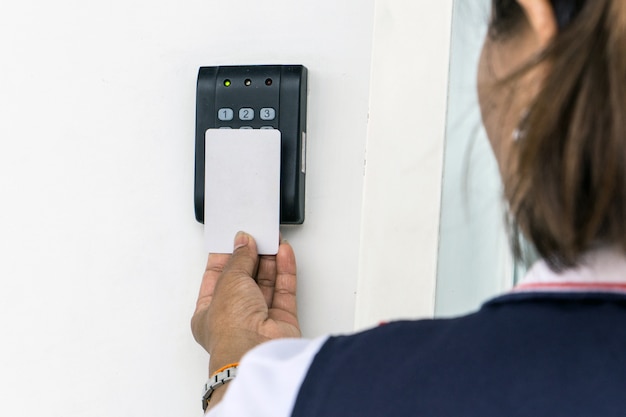
Access control systems require people to authenticate their identity before allowing entry. Individuals must verify who they are through credentials like keycards, passwords, PINs, or biometrics such as fingerprints or retina scans.

Many systems also incorporate surveillance cameras, alarms, and sensors on doors and other entry points to provide multilayered protection. Sophisticated software ties everything together, enabling features like scheduled or remote locking/unlocking and detailed activity reports.

Types Of Access Control Solutions
Types Of Access Control Solutions

From small offices to multinational companies, there’s a form of access control for every need and budget. Card-based systems requiring an authorized badge for building entry are common. However, not every company needs biometric systems to confirm identity via fingerprints or other unique physical identifiers before granting access and offering a high level of security.

Internet-based systems allow convenient remote functionality through web applications and mobile device control. Whatever the technology, there are now more access control options than ever protecting facilities worldwide.

Furthermore, the security access control solutions can be divided into different sections, and they include visionary access control, role-based access control, and mandatory access control. The manufacturers of these access control systems are evolving with continuous ideas.

They are working on extensive permutations and combinations with the technology, improving the overall security system. Hence, standardized security is the ultimate objective that the stakeholders are looking at.

Benefits For Buildings Big And Small

An electronic access control system can benefit anywhere managing access is a priority. For large corporations, it boosts security while making it convenient for thousands of employees to move freely within appropriate areas. Schools utilize the technology to screen visitors while tailoring access permissions so staff, students, and parents only reach certain locations.

Government and healthcare facilities house sensitive information, making rigorous access regulation essential. Even small businesses stand to gain from streamlined access management, employee accountability, and strengthened protection.

The Use Of Access Control Systems In Diverse Sectors

Access control systems simplify the entire security network in different ways. Whatever your business may be, you make use of them here for the sake of your convenience. However, a wide range of industries use access control systems.

Business Enterprise

Business Enterprise

Any business that accepts and thereafter processes the credit cards must meet the data regulations. The access control system can restrict the IT rooms. Thus, they can track down access to certain data and thereafter safeguard information.

Healthcar

Healthcare is one of the sectors that is sensitive and vulnerable to the intrusion of outside elements internal to her periphery. The healthcare units use access control systems to adhere to the HIPPA regulations for health data. The insurance companies’ doctor’s offices protect the care users with access to the control systems. They can protect the IT rooms with the equipment. Ultimately, you get the safeguarding with the help of the physical files and highly sensitive equipment like the MRI machines.

Government

Security is one of the topmost priorities of the local and state governments. The buildings of the governments are subject to the security regulations of the homeland. It may restrict the entry. However, access control systems verify employees’ access to confidential information.

Education

Education is one of the important business sectors that take absolute control over their internal system through access control. The schools, colleges, and universities have many campuses which are quite large. Moreover, they have security needs in multiple locations.

The access control systems for the students and the faculty help them enter through the doors and access points on the entire campus. Even the lab equipment or the expensive computers can be programmed. It ensures that only those who are registered for the courses can enter the facility.

Worship Centers

Hundreds and thousands of people attend these places. These spiritual centers welcome people from different places. The access control makes entering the compound easy. The synagogues and the mosques can track the comings and goings of the employees. At the same time, they also keep the areas like daycare centers and offices safe and secure for others.

Bringing Access Control Into The Future

Bringing Access Control Into The Future

Access control technology continues advancing rapidly, with cutting-edge systems offering more security, functionality, and analytics than ever before. Emerging trends include remote capabilities via cloud platforms, increased automation through artificial intelligence, expanded biometrics identification, and integration with other systems like video surveillance and fire detection.

As risks evolve, so too will access control systems, incorporating innovative resources to keep infrastructure, data, assets, and people better protected worldwide.

Staying One Step Ahead

In a complex world, access control systems deliver an invaluable safeguard to help keep what we care about most a little bit safer. As long as there are threats for soft targets, access control will remain an essential cornerstone in enhancing security in facilities across every landscape. These stalwart protectors stand guard 24/7, vigilantly keeping danger at bay and peace of mind in reach. When so much relies on staying one step ahead of malicious activity, access control systems will continue advancing to meet each emerging challenge.
Read Also:

Ankita Tripathy loves to write about food and the Hallyu Wave in particular. During her free time, she enjoys looking at the sky or reading books while sipping a cup of hot coffee. Her favourite niches are food, music, lifestyle, travel, and Korean Pop music and drama.

View all posts

Leave a Reply

Your email address will not be published. Required fields are marked *

Related

Avoid Scams

Internet Safety: How To Spot And Avoid Scams

Individuals and businesses are at increasing risk from online scams. Let’s set the scene. According to International Data Corporation, there will be more than 40 billion connected devices worldwide by 2025. Cyber Ventures reported that almost four million records are stolen daily due to data breaches, which is about 45 per second. And a study from Maryland University demonstrated that there is a new victim of cybercrime every 39 seconds. Online scams are costly and potentially fatal. While many dangers exist online, raising your awareness and adopting good habits can improve your information security and internet safety. How to Spot (and Avoid) a Scam Phishing attempts are the primary ways people are scammed online. Scammers may send these communications via social media and text, but the overwhelming majority use email. While phishing attacks can be specific - known as spearphishing attacks - the vast majority are sent indiscriminately. Fortunately, this spam will tend to have some giveaways. Spotting these can help protect us and our data. Demands for Personal Information Reputable businesses don’t ask for personal information via email or social messaging. Delivery drivers that need you to confirm your full name and address are normally bogus. Banks and government departments never ask their clients to send sensitive data such as bank account information, usernames, or passwords via email. Offers Too Good to Be True (Probably Are) Be suspicious when offered extremely low-price goods, services, or holidays. If it makes you wonder how they can afford to make such a deal, the answer is that they expect to add hidden fees, or the offer doesn't exist. The sender expects to gain valuable personal information from people eager to sign up. Claims You Have Won Something It's exciting to win a contest or lottery draw but ask yourself if you even entered a competition. Messages like these generate excitement and prompt people to act quickly to claim their prize. Such communications may also suggest that you have been personally and individually selected. In a way, you have been selected, but so have thousands of other people, and not for anything good. Terrible Spelling and Grammar Spam is renowned for its major spelling and grammar issues. To avoid scams, remember that businesses spend thousands on marketing. They work hard to ensure their communications are attractive and error-free. If you notice spelling and grammar errors, it's unlikely to be from a reputable business. Fake Addresses and Other Impersonation Attempts Scams often use impersonation to benefit from a brand’s authority. People are more likely to believe a message if it seems to be from Microsoft or the Government. To avoid falling for this trick, check the URL or email address carefully. A scammer typically alters a business name slightly to make it seem authentic, such as the Facebook instead of Facebook or Microsoft instead of Microsoft. If the sender claims to be from a big organization but uses a generic email account, like Gmail or Hotmail, this is also a warning. High-Pressure Tactics Most scams work best for criminals when the victims don’t think too deeply about their actions. Communications that insist on an urgent, immediate response should be read very carefully. Verify the details where necessary. More on Avoiding Scams Now that you know how to spot and avoid specific scams, here are some more tips on how to avoid scammers in general. Use Reverse Phone Lookup Services to Verify Senders’ Details One reason the internet is such a hotbed for crime is that it’s easy for criminals to maintain anonymity. Cybercriminals can stay off the radar by using a virtual private network and dealing in wire transfers and cryptocurrency. They can pretend to be someone else, of course; your bank manager; a delivery driver; or an IT help desk technician. Or a friend or family member. If you’re not sure who you are communicating with, use the internet to your benefit. Go to PhoneHistory or any other reverse phone lookup site to verify people’s contact details. You can do this whenever you have suspicions or simply because you’re dealing with someone you’ve not met in a physical location. Block and Report Spam Don’t hit reply, no matter how much you’d like to hit the sender. Giving them a piece of your mind tells them you have an active email address and that other spammers should probably target you. Most email service providers enable you to block and/or report spam. Ideally, do both. Depending on the email system, you might need to choose “block” before you see the option to report it, or vice versa. Blocking and reporting spam helps your email provider eliminate spam emails from your inbox. And it can help them protect other users from potentially harmful communications. Do Not Interact with Potential Scammers Resist the temptation to click on a link within the message if you are suspicious about the sender's intent. Clicking a link can signal to the sender that your email address is active and cause malware to be downloaded to your device. Malware can cause many issues, including: locking you out of your machine (a distributed denial of service attack (DDoS)); encrypting your data unless you pay a ransom for the decryption key (ransomware); installing software that allows a third party to track your activities and/or keypresses (spyware). Read Privacy Notices Since the implementation of GDPR cybersecurity regulations, a pop-up frequently appears on visiting a website,  inviting you to read their privacy policy and asking you to confirm your preferences regarding cookies. Most websites are reputable with good intent. Sometimes, however, they are willing to sell the information they learn about you to third parties, who may send you anything from unsolicited marketing emails to harmful, targeted scams. If you don’t have the patience to read every privacy notice, it is still worthwhile saying no to all but essential cookies. It’s quicker than it seems. And make sure to deny the company’s permission to contact you or share your data unless you trust them. Conclusion Internet safety can seem daunting, but most people don’t think twice about improving their car security, home security, and personal safety.  Stay observant, check out the identities of people you haven’t developed relationships with yet, and employ a few other good internet habits to keep you, your friends, and your family safe online. Additional: What Is Zero Trust In Cybersecurity Context?  Top 6 Cybersecurity Trends Everyone should Know Everything You Need To Know About PKI In Cybersecurity Top 10 Cybersecurity Features That Are A Must-Have In An Ecommerce Store

READ MOREDetails
Improve Your Internet Privacy

5 Tips to Improve Your Internet Privacy

Have you ever faced a cybersecurity breach or a severe hacking attempt? What was the most overwhelming feeling following the occurrence? Indeed, whenever something of such sort happens, we feel that our privacy got breached. We begin to realize that there’s no more confidentiality left, and someone else is in command of our personal affairs. The truth is that’s when we discover the true worth of maintaining our privacy. The reality, as it seems, is that individuals or companies may face a cybersecurity breach irrespective of what they do. It is simply because the technology and security systems have progressed, threats have advanced too. Somehow, those attempting such manipulation always find a way to defeat the security measures and protocols. One way to combat or at least minimize such a level of a breach is to pay extreme care to personal security. At an individual level and as an organization’s employee, a person can somewhat tackle the threat with some steps. These include being cautious when using a public computer and avoiding sharing personal information online. Another measure is to gain advanced cybersecurity expertise. In other words, you may earn a postgraduate degree in cybersecurity to defend against threats. In doing so, you will learn in detail about cyber law and security and how they apply in today’s digital age. You will also study digital forensics, focusing on the investigation of data on the devices. Only a Cyber Security Masters or Bachelors degree can provide the opportunity to earn discreet knowledge on the subject. While you do so, why not learn about some essential tips to safeguard your internet privacy? Let’s begin. 1. Be Wary of the Websites You Visit: The first rule to maintain your privacy is to be conscious of your browsing habits. It is essential to be mindful of the sites you visit not to fall into any trouble unknowingly. When we talk about websites, we generally think that avoiding them is too convenient, while this isn’t entirely true. Substandard websites or those that have ransom-ware or harmful downloadable programs in them do appear in disguise. Further, they may have engaging content, such as a compelling catch-line to lure the potential victims. Pointing them out and avoiding them is the key to keeping your privacy intact. 2. Draw Limitations on Social Media: Social media can have the most profound impact on your privacy, so we need to be careful about it. It seems just so tempting to jump on the bandwagon and share our two cents on a trendy topic. But, if you want your privacy to remain, you will need to draw out some limitations on the usage. When we say restrictions, we don’t mean that you shouldn’t engage with your acquaintances or engage with potential customers. Instead, what we mean is that you should be careful about what you post. Don’t hand out your personal information or data that could harm you in the longer run. 3. Ensure Privacy Checks Exist: Your steps for privacy should be of paramount importance to you as these guarantee confidentiality. To ensure that, it has to be conscious and constant effort to avoid facing a predicament. Besides being alert, one needs to place sufficient privacy checks, depending on their individual or organizational needs. Especially at an organization level, you will need to ensure that your employees follow online safety protocols. Each resource will need to make decisions and execute plans as per the company directives. Every individual needs to be aware of the steps to take in data theft or online breach. 4. Install Sufficient Software: It would be best to have specific programs on your computer to safeguard your crucial information from all privacy breaching attempts. Let’s try to understand it from a larger perspective. When you are securing your house, you install ample security devices and systems. The primary reason is to rule out any intrusion. Similarly, you need to install sufficient software on your machine to avoid any invasion. It includes anti-virus, anti-ransomware, and anti-spam programs that can safeguard your computer. But remember that you have adequate memory in the machine to keep running everything smoothly. Also, all programs must have complete synergy to produce the effect needed. 5. Secure Every Device: When we strive to maintain privacy, we primarily focus on securing our computer, laptop, or tablet. In doing so, we sometimes overlook our smartphones, and that’s where the problem begins. If we ponder it, it is our cell phone we use the most, so greater care is needed there. The biggest potential threat in terms of privacy when using a mobile phone is an app. Sometimes, we need an app urgently so that we can download the required program in seconds. However, it is essential to make all the devices secure to maintain comprehensive privacy. Final Thoughts: Attaining online privacy seems like an uphill task in today’s digital era. In a fast-paced world where businesses have intense competition, it is always hard to be alert about privacy. The existing threats of data breaches make it even more difficult to ensure security. But a few steps for online privacy can go a long way in ascertaining productivity and progress. So let us act wisely! Read Also: 8 VPN Facts – You Should Know About Top 10 Cybersecurity Features That Are A Must-Have In An Ecommerce Store What are the things you need to know while choosing Antivirus Software? Five Tips to Make Sure Your Security Software Is Actually Secure

READ MOREDetails
Security Cameras

Deciphering the Myths About Home Security Cameras

Security cameras are the in-thing today. They are used in many homes as a way of enhancing security. However, despite the fact that they are common; there are many wrong perceptions about them. Surveillance cameras usually play a key role to fortify your house. These home security cameras can be installed in either the indoor or outdoor areas of your home. They are used to capture the photos and footages of possible intruders. Since home security cameras are significant in safeguarding your home, you must know the misconceptions about them. This will enable you not to pay due regard to these misconceptions. By doing this, the effectiveness of your home security system will not be affected. Here are six myths about home security cameras; All Security Cameras Serve the Same Purpose: Many people think that all security cameras are the same, so they can serve the same purpose. As asserted by Tech Web Space, this is not true. There are many types of security cameras. They all work differently. Each of them is designed to fulfill a distinct security need. For instance; there are dome, bullet, and IR day/night cameras. Bullet and dome cameras can only be installed in indoor areas, while IR day/night cameras can only be put in outdoor areas. So, a dome camera is effective to monitor your staff; while an IR day/night camera is effective to prevent burglary. Also, IP security cameras can record a video of the ongoing activities of an intruder; while other normal surveillance cameras cannot. There is no security camera which can fulfill two roles at the same time. So, you should know your major security problem which you intend to address. With this problem in mind, you can then choose the most appropriate type of security camera. Security Cameras Are Super Heroes: When some people purchase a security camera, they tend to think that they have solved all their security issues. They believe that their houses will be fortified by the virtue of them possessing a security camera system. They equate home surveillance cameras to superheroes in regard to matters of security. This is a very wrong perception. As much as you buy a security camera, you should still take other appropriate measures to safeguard your home. Security cameras can be limited in discharging their functions. For instance; bullet and dome camera types will not function well in dim lighting. Also, when you don’t position your camera well; you may create a blind spot. This blind spot will give a leeway which will allow criminals to operate in. It Is Very Easy to Install a Security Camera: You cannot learn to install a security camera after watching some few DIY tutorials. Installing a security camera is a difficult task that requires some specific skills. You will have to be equipped with basic scientific knowledge. You will also have to understand how to match the lighting conditions and the recording angle with the camera capabilities. This is not something which you can learn within a few minutes. So, never attempt to install a security camera by yourself. You can only attempt to do so when you have received appropriate guidance. You may tamper with it right from day one. Instead, as provided for by Tweak Your Biz; you should contact your security company which will help you out with the installation. You Can Use a Dummy Camera Instead of a Real One to Keep Off Intruders: Of course, there are some foolish robbers who can be frightened off at the sight of a dummy home security camera. However, this trick will not work well with an experienced thief. In fact, most thieves can detect a non-authentic camera at an arm’s length. So, never go for shortcuts. Use real home security cameras, not fake ones. Home Security Cameras Are Expensive: It is only in the past ages when home security cameras were a reserve of the rich. Nowadays, surveillance cameras are affordable to all and sundry. There are many security companies today. This has enhanced market competitiveness. Different companies are using different strategies to have an edge over each other. This has significantly reduced the costs of security cameras. Moreover, their operation and installation costs are cheap. Home Security Cameras Are Only Used to Keep Off Intruders: Apart from preventing the entry of intruders, surveillance cameras can serve others more purposes. For instance; you can use them to monitor your employees in your servicing business. You can also use them to check on your kids’ activities when you are away from home. Though security cameras are mainly used to prevent crime, they can improve your general living standards. With them, your daily tasks will be simpler and more effectively done. Conclusion: All in all, surveillance cameras will grant you immense assistance in safeguarding your home. They will keep off intruders, reduce crime rates and, prevent robbery and burglary. Therefore, you should not allow these myths to restrain you from owning one. Read Also: How To Improve Workplace Security WiFi Security: Mediocrity To Excellence Why DRM Is the New Standard for Document Security

READ MOREDetails